
By Eleanor Hulan, Alliance Intern and Bike Commuter
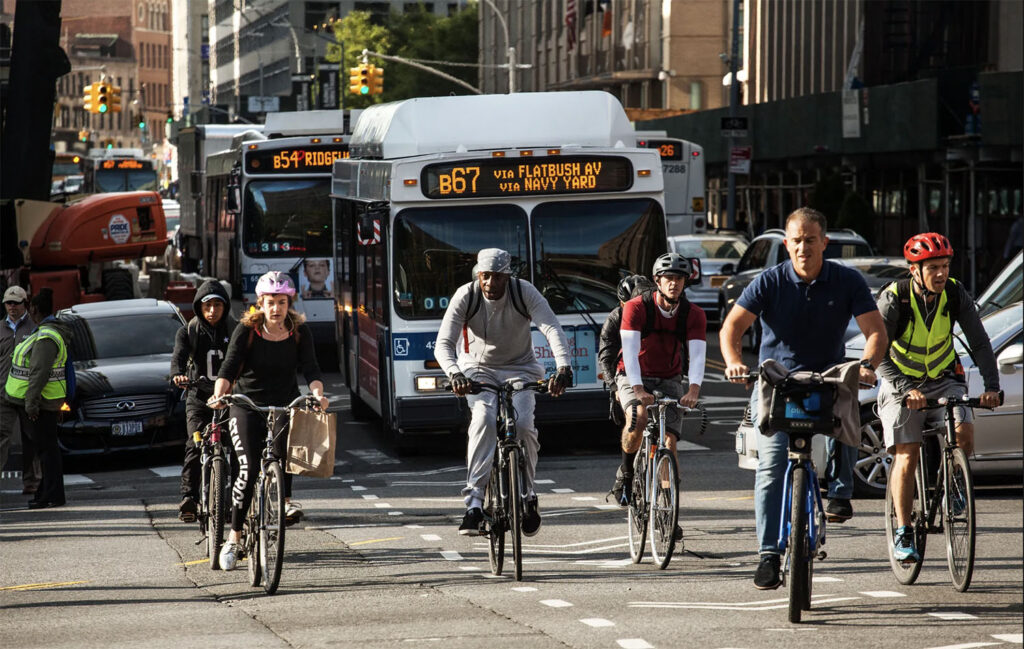
Many people in the car-dependent Midwest can’t believe that I not only bike to work 6 miles round trip through Minnesota’s cold winters, rainy Spring days and scorching summers, but I choose to bike to see my friends and attend events. Just the other day, the valet where I work incredulously asked me, “You’re actually biking home?” Yes, I was. And yes, I can actually imagine a world without cars.
Getting on a bike has always appealed to me. I’ve gone to school and work this way since I was young, and it gives me a sense of connection to the world around me without a layer of glass in the way. I’m not gifted with a strong sense of direction, and, after an initial steep learning curve, biking has always helped me make sense of whichever city I happen to be in. I’m not responsible for gas or upkeep. I don’t have to worry about parking. I feel more attuned to nature and in sync with my body.
World Bicycle Day is coming and it’s a perfect opportunity to explore the environmental, economic and health benefits of biking. It’s a sustainable method of transportation that is integral to a more free and equitable future. It strikes me as odd that it took the UN until 2018 to finally recognize the importance of bikes as an important sustainability solution.
“The bicycle is one of the most eco-friendly modes of transportation that significantly reduces emissions…bicycling delivers far-reaching positive socioeconomic impacts in addition to reduced pollution.” – UN Resolution 15 March 2022
So now that we recognize it, let’s actually start riding bikes and getting all the benefits they offer us all. And guess what? Those benefits include saving money.
So Why the Hate? Biking for Recreation or Necessity
I see a lot of animosity towards bikers, online and in-person. There’s an enduring perception that they’re somehow elitist, that groups of them like to block the roads for fun. This is a continuous problem for people who practice sustainability, from veganism to tree-hugging. It’s a cultural issue, the investigation of which could fill a book.
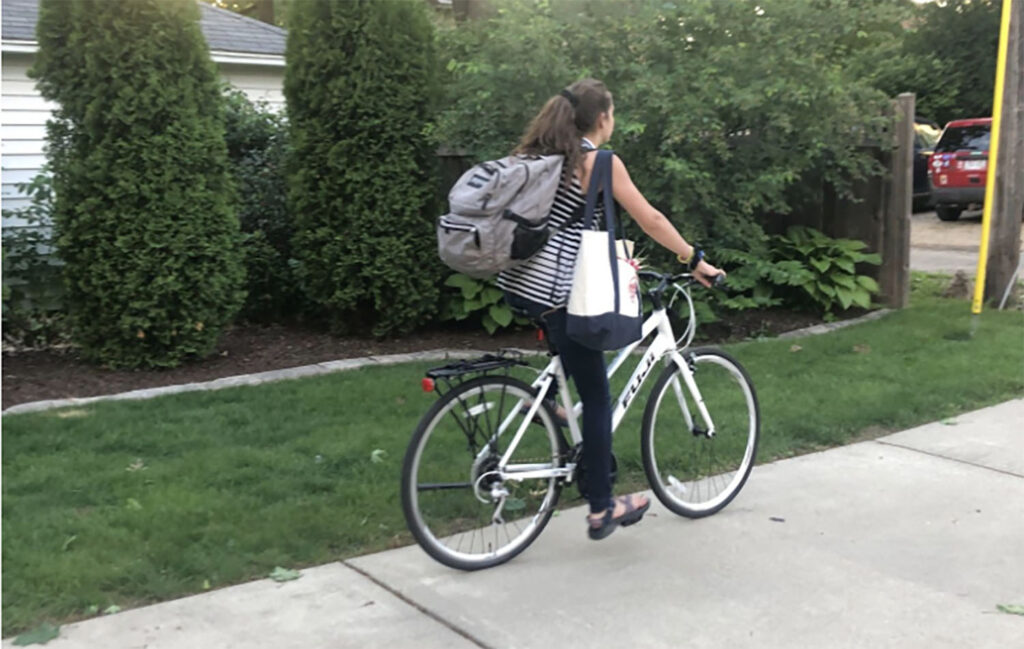
I should clarify – I’m not one of the road-blocking individuals in brightly colored spandex, aerodynamic helmets, atop a 3-D printed seat. I’ve had the same bike since I was 15. It’s not very flashy, although I did decorate the wheels with some neon plastic bubbles when I was younger. I’m not in a competitive cycling group. I use my bike to commute a few miles to work, run errands, and visit my friends.
Ultimately, it doesn’t matter. Both groups – the devoted hobbyists and the casual riders – are necessary to build a more bike-friendly country and world. There are also groups that combine the two: organizations specifically for biking commuters.
If you’re not convinced, let’s pivot to something that is not often looked down upon: saving money.
Can You Imagine Being $10,650 Richer Every Year by Biking Instead of Driving?
In the 10 years I’ve owned my bike, I estimate I’ve spent about $200, mostly for tires and brake pads, plus $150 for a bike overhaul four years ago. These figures are low mostly because my bike isn’t state-of-the-art and because I’ve always been fortunate to meet other bikers who’ve helped me out with replacement tubes or spare air pumps.
If I had a car, I would be spending somewhere in the vicinity of $11,000/year, or $110,000 over the same period of time. My choice has saved me $109,650.
Even if you’re in the market for a pricier option like an ebike or a newer model, the savings compared to buying and maintaining a car are obvious in fuel costs alone.
Biking Can Save Cities and Taxpayers Massive Amounts of Money
A 2022 analysis by the US Department of Transportation found that for every $1 invested in pedestrian or bike-based transportation (like widening sidewalks, creating dedicated lanes, and limiting flow of traffic on certain streets) communities could see up to $11.80 in return, a combination of healthcare savings, local business revenue, and increased property value.
A Federal Highway Administration (FHA) workbook on incorporating bicycle networks into city planning estimated that adding bike infrastructure during an ongoing street resurfacing project would cost only about $20,000 per mile, compared to the resurfacing itself which ranges from $400,000 – $800,000.
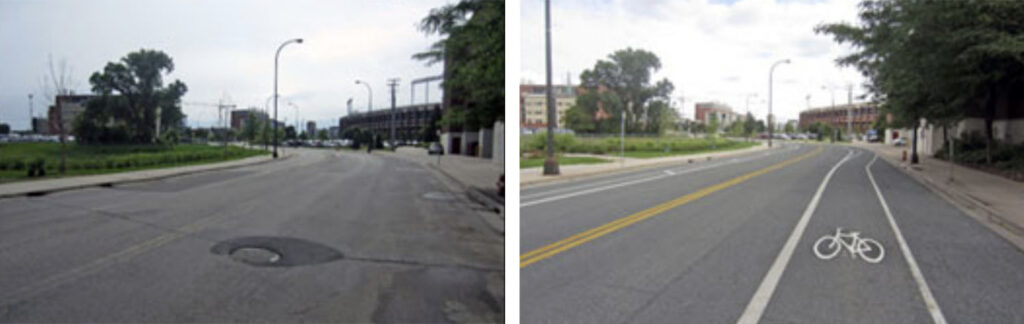
It’s intuitive that a bike will cause less wear and tear to roads than a large motor vehicle. There is less leaching of chemicals, less wear on asphalt, and less eroding of surface materials.
- A study out of Portland, which has 160 miles of bike lanes, 94 of greenways, and 85 of bike paths, estimated that the cost of replacing this entire network would be around $60 million. This figure is also the approximate cost of building a single mile of a 4-lane freeway in Portland.
A variety of cities including New York, Salt Lake, San Francisco, have conducted studies that show that increasing bike infrastructure, like building protected lanes and designated bike lanes, raises revenue for local businesses. - In New York, for example, on 9th street, local businesses reported a 49% increase in sales after the installation of a protected bike lane.
- A similar study of a local San Francisco street showed a 66% increase in local revenue with widened sidewalks and added infrastructure.
The Multiple Health and Savings Benefits from Biking
Cycling makes us healthier. It also saves us money. The World Economic Forum found that bike commuters collectively take 1.1 million fewer sick days every year. The WHO recommends biking as a way to decrease risk of diseases like diabetes and cancer.
A Portland study regarding biking investments estimated that by 2040, investments in the range of $138 to $605 million will result in health care cost savings of $388 to $594 million and fuel savings of $143 to $218 million.
And one midwest-focused study of 11 metropolitan areas in the great lakes region found that if people swapped half of their less than 5 mile commutes from car to bike, $3.8 billion in associated health care costs would be saved. The authors say they’re likely underestimating these numbers, given the air pollution associated with auto use also leads to health care expenses.
Other Countries Show Us the Way and Document Remarkable Societal Benefits
Some countries bike more than others. People may immediately think of the Netherlands or Denmark when asked to picture bikers. Indeed, the Netherlands has more bikes than people, and Denmark is known for its infrastructure and embracing the bicycle as a cost-saving measure.
A new study out of Copenhagen, conducted from 2002 to 2025, found that ”Every 1 kilometer (.62 miles) traveled by bike generates a net societal gain of $0.75, and this figure increases to $1.55 when a bike trip replaces a car journey.” Much of this is in healthcare savings, and in offsetting pollution. The same study also found that, yearly, cyclists in Copenhagen save over 90,000 tons of CO2.
In the simplest terms, study after study shows us that biking generates net benefits on multiple levels for a city.
Please Don’t Run Me Over: Keeping Ourselves Safe in a Sometimes Hostile World
Even in Minneapolis, a city that consistently ranks in the top 10 for bikeability, I’ve had my share of close calls. I’ve been hit by cars twice – luckily emerging with just some bruising. Ultimately, once the adrenaline wore off, I mostly found myself angry. Numbers of bicycle-related fatalities in the US are actually trending upwards, which is unacceptable.
This can be scary. We feel a lot more vulnerable on a bike – there’s no protective metal shell around us, no air-bags, and it’s up to us to stay upright. However, cars are the deadly element in the equation. High bike fatalities aren’t from cyclists crashing into one another. In 2024, 39,254 people died in US traffic crashes. Tragically, 2.8% of these fatalities were bikers. The number should be zero.
I view this unfavorable upward trend in the same way I view every terrifying climate trend we have been witnessing for the last 150 years. It is horrifying, but this does not mean we should give up. In fact, it means we should fight even harder. We should keep biking, practicing sustainable lifestyles, conducting research and finding solutions. Get back on the bike, as it were.
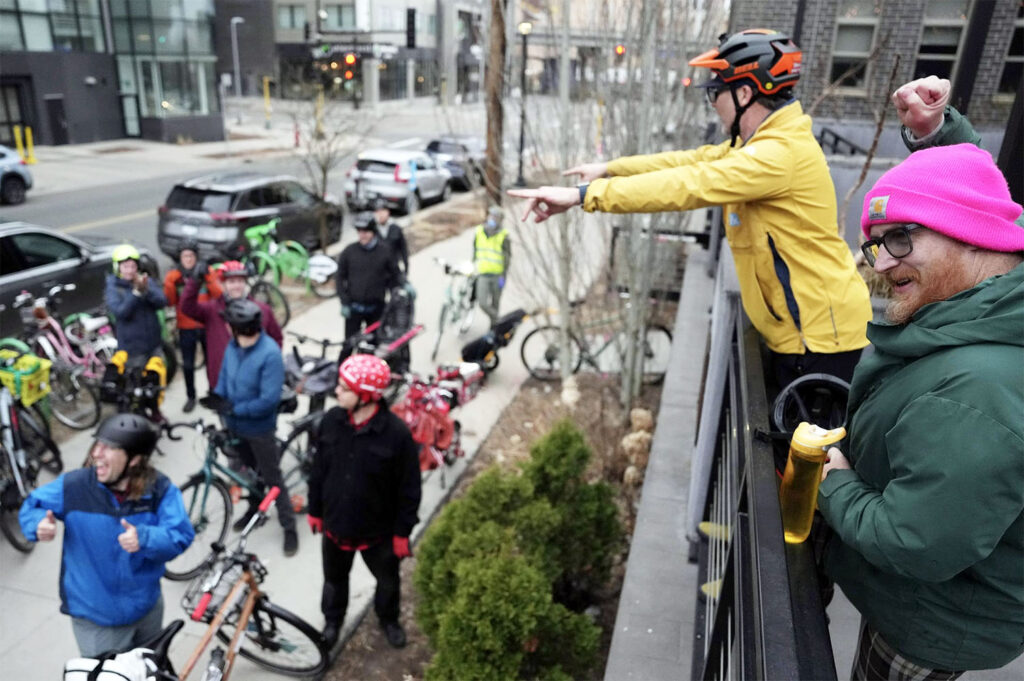
One of the most important objectives of the groups I mentioned earlier is promoting safety. In cities without dedicated bike lanes or parkways, cycling even a few miles to work can be a daunting task. What people may not realize about groups of bikers they label “road-blockers” is that they’re not just there to make a car user late to their job. They’re often practicing safety in numbers – a lone cyclist is much more likely to be hit than a group of 5-10.
Helmets, bike lights and bright colors are all important as well. Through a U of MN grant, the East Bank neighborhood in the Twin Cities is giving away helmets in a variety of sizes and colors. Helmets reduce the risk of head injury by 60%, and brain injury by 58%.
Biking Can Mean Freedom for Our Childhood Selves and People in the Global South
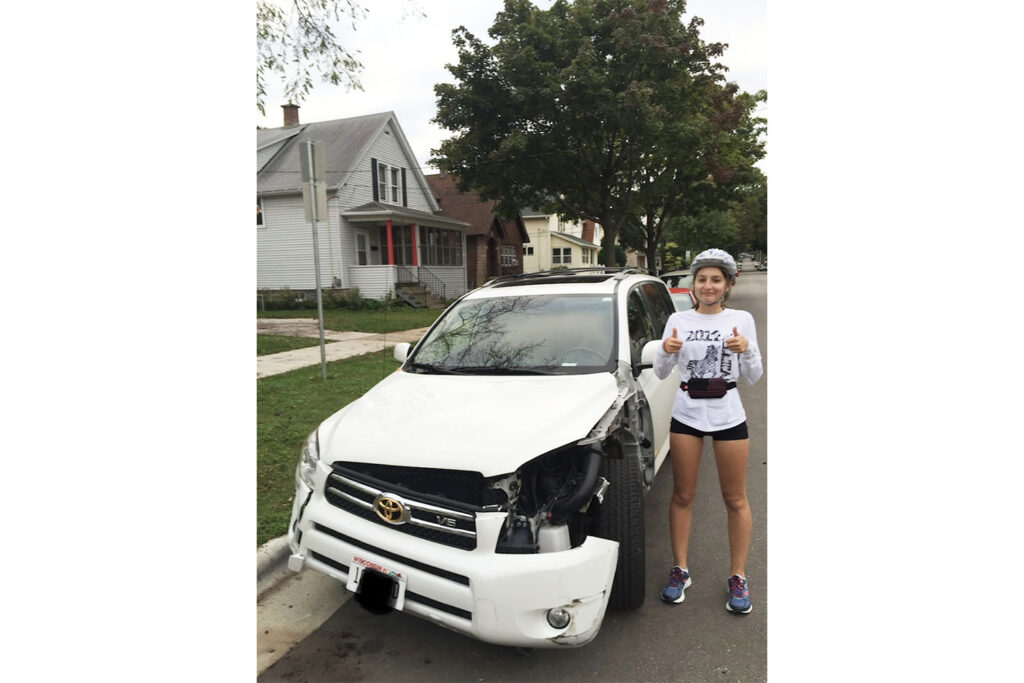
Learning to ride a bike is a rite of passage. It’s a common trope in movies and books – something a child learns to do with their parents or a mentor figure and subsequently gains independence. Later, that turns into the “car at 16” narrative that the commercial culture of the US promotes as essential.
Not for everyone. Back in Madison, it was often commented that one could always tell when the members of the high school I attended had shown up to a house party because of all the bikes outside. That still felt like adulthood, at least to me.
The UN Sustainable Development: Harmony with Nature brief also acknowledges the importance of bikes in developing countries and areas experiencing extreme poverty. They are “another mode of transportation that serves to aid community resiliency around the globe during emergencies and disasters.”
The Village Bicycle Project in West Africa focuses on providing dependable transportation for women and girls who would not otherwise have access to educational opportunities. There are charitable organizations in India and China that do the same.
In the western world, bikes can also be the best option for people who may not be able to drive for a number of reasons, including invisible disabilities. That sense of independence gained flying down a hill for the first time is not just a childhood memory. Biking continues to be the means to participating fully in the world for many of us.
Better Late than Never: Come Bike With Me
So this Wednesday, try dragging that dusty bike out of the garage, pumping up the tires, putting on your helmet and taking it for a spin. You’ll be healthier, happier and wealthier. The planet will thank you for it. And as avid cyclist and former Secretary of Transportation Pete Buttigieg says:
“We’re going to be a better, safer, cleaner, and greener country the more people have safe options to get around on two wheels.”