By Teri Reitan, Alliance for Sustainability Co-Executive Director
Every wave of new environmental regulation arrives with the same promise: less waste, more accountability, a cleaner path forward. The EU’s recent circular economy laws are some of the most ambitious attempts yet, and I believe they’re the right laws, built for the right reasons.
For example, the revised Waste Shipment Regulation tightens controls on plastic waste exports so waste is actually managed responsibly instead of simply shipped out of sight. The Packaging and Packaging Waste Regulation pushes packaging toward recyclability and away from reliance on virgin plastic. The Ecodesign for Sustainable Products Regulation pushes products toward durability and repairability instead of disposability.
If these laws work as intended, the payoff is real: less waste quietly exported and forgotten, stronger markets for recycled material, an economy built to outlast a single use.
But writing good policy and making it work fairly for the people already doing the hardest recovery work on the ground are two different challenges — and the gap between them is too wide.
A Well-Intentioned Paradox
These regulations are part of a broader attempt to correct a model that has long allowed environmental damage to be pushed downstream onto other places and other people. And yet, one hard truth in sustainability work is that even beneficial laws can have unintended consequences when implemented in uneven real-world conditions.
The regulations did not land on a level playing field. They landed in markets where financing is uneven, certification systems are incomplete, infrastructure is underbuilt, and community-based recyclers are already doing difficult work with limited support.
In these conditions, higher standards can create a paradox: the environmental direction may be right, but the transition burden can fall most heavily on smaller actors who are already helping recover materials and build circular systems from the ground up.
Paying Twice for a Crisis They Didn’t Cause
And I think there is an even deeper reality here. The issue is not only that circular economies without enough systemic support can be strained by better rules. It is that many of the communities most affected by plastic waste had little or nothing to do with creating the problem in the first place.
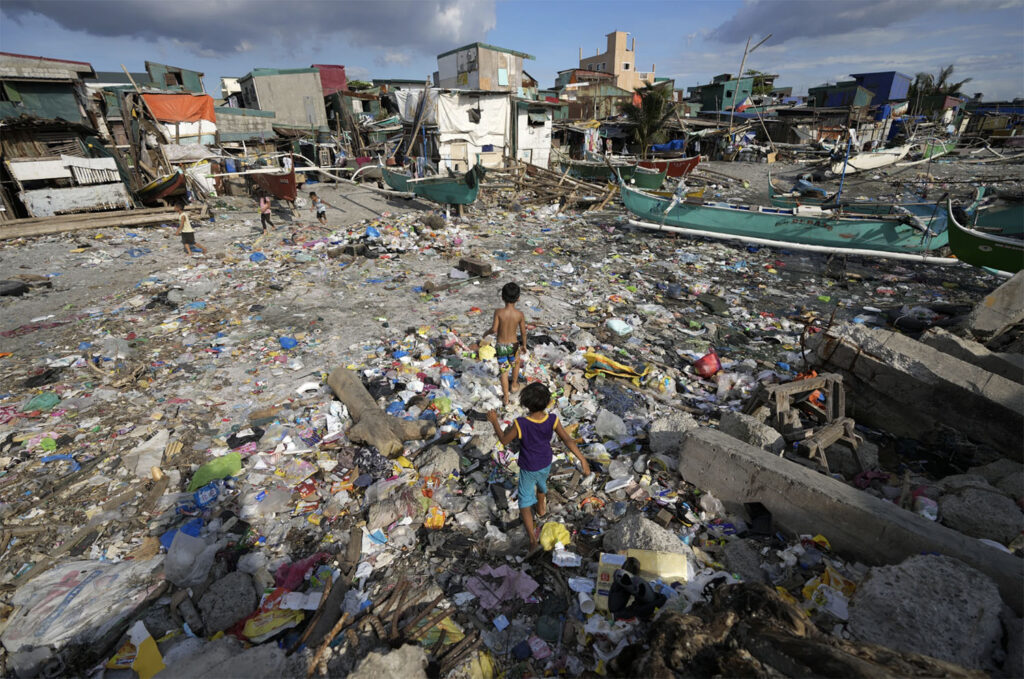
They did not design the toxic packaging systems. They did not build the global economy of disposability. They did not profit from the flood of cheap plastic. And yet they are often the ones who live with the waste, the pollution, the health risks, and the economic instability that follow.
Whether or not a circular economy is already in place, many communities are left to suffer from a crisis they did not create. All too often they are asked to carry the additional burden of helping solve it.
A Key Question to Ask
That is one reason I found my recent conversation with Co-founder and COO of Buy Food with Plastic, Frank Ivan Sarria Palacios, so important. He wrote afterwards that what he appreciated most was the spirit of our conversation.
It was not about defending regulation or criticizing it. It was about asking a better question: How do we achieve higher environmental standards while strengthening the communities already doing the work of recovering materials? I believe that is exactly the right question. Good policy and practical experience should inform each other.
That question leads directly to why Buy Food with Plastic stands out so powerfully to me.
Buy Food with Plastic has built a model that is both practical and deeply human. In communities Nicaragua, Ghana, and India (facing both poverty and plastic pollution) the organization has worked to turn discarded plastic into meals, recycling plant jobs and products (made from recycled plastic) that can then be sold.
When the Market Got Harder, They Leaned In
What I find especially remarkable is not just its mission itself, but the way Buy Food with Plastic responded when the external environment became more difficult.
Also in our conversation, Frank concluded these circular economies would not be able to become self-sufficient if they remained dependent on aggregators and other outside players. So rather than retreating, the leaders made a bold strategic shift: they decided to move further up the value chain themselves.
That meant pursuing pelletizers, more complex recycling operations, larger contracted partners, and longer-term structures that could help keep pricing more stable and create a stronger economic base for the communities they serve. This was a large pivot that involved major cost, patience, risk and roughly a two-year effort to build.
The scale of the capital required for more complex recycling plants and associated equipment was significant and was provided by some of their very generous donors. Just as importantly, Buy Food with Plastic pursued 10-year contracts with business partners to create more pricing consistency in a sector where volatility can quickly undermine recovery systems.
What Institution-Building Actually Looks Like
To me, its choice to build more of the infrastructure needed to protect the communities it had already committed to is extraordinary. Frank emphasized how important the communities’ trust in Buy Food with Plastic and its leadership truly is.
It chose to become more self-sufficient so those communities could become less vulnerable to unstable markets, weak intermediaries, and broken incentives. In other words, it responded to external pressure not by narrowing its mission, but by deepening it.
The courage and importance of trust in that decision become even clearer when considering the human side of its work. Employing people in rural communities where many had never held a formal job before means investing not only in technical training but also in soft skills, patience, structure, and trust.
It also involves helping workers open their first bank accounts, teaching the responsibilities of holding a job and placing collection points and recycling plants strategically so no employee has to walk more than a kilometer to get to work. It requires considering future transportation needs for employees. This is institution-building at community level.
The Rising Cost of Doing This Right
For environmental law to succeed, it must also ensure the communities already living with the consequences are not left to bear the costs of transition alone.
In Malaysia, for example, a Zero Waste Europe case study describes how communities suffered serious local harm after international plastic waste flows shifted there following China’s import ban. Residents in places like Jenjarom reported respiratory problems, skin rashes, eye irritation, toxic runoff, and damaged harvests.
Community groups such as the Kuala Langat Environmental Protection Action Group, Sahabat Alam Malaysia, and the Consumers’ Association of Penang have documented harms, pushed back against illegal operations and advocated for better solutions for the communities and civil-society groups that often absorb the consequences of a plastic system they did not build.
The bar has become very high for organizations trying to build real circular alternatives. In Kenya, Mr. Green Africa has expanded a community-based collection model while investing in more formal traceability systems, food-grade PET conversion, and pre-processing infrastructure so it can supply high-quality recycled plastics to larger buyers.
In West Africa, the Mohinani Group, backed by the IFC, is scaling PET recycling plants in Ghana and Nigeria through a $37 million financing partnership, with each plant designed to produce 15,000 tons of recycled PET annually and much of the feedstock sourced from local small businesses involved in collection.
These examples show how demanding participation in the next phase of circularity has become: more capital, more verification, more infrastructure, and more operational sophistication.
The Answer to the Paradox
That is why I keep coming back to Buy Food with Plastic’s response. Faced with market instability, regulatory complexity, infrastructure gaps, and significant capital costs, it chose to strengthen the local circular economies in the communities it serves.
The leadership of Buy Food with Plastic has shown us what it looks like when an organization refuses to accept the injustice as inevitable. They’ve shown what it means to meet rising standards with courage, long-term thinking, and real commitment to community empowerment. They’ve demonstrated there is food and money to be earned by cleaning up the earth.
In addition to good policy, the future of the circular economy will depend on whether we are willing to build systems that support the people doing the hardest work closest to the ground.
Buy Food with Plastic has set an excellent example for the rest of us to follow.