By Alliance President Terry Gips
In his excellent Substack piece, The Risk Math on Corporate Sustainability Just Flipped, one of my favorite sustainability authors Andrew Winston seeks to digest the likely impacts of “The historic election last week” and its “million hot takes.” It will take months or years to fully unpack what it means for everything from climate change and data centers to the rule of law and basic decency.”
He then addresses what it means for the Trump administration’s attacks on corporations for their efforts In the sustainability realm, where he feels “there’s a renewed potential for action on climate change and inequality…if not at the federal level, while the president retains veto power, then at the state level, which saw sweeping shifts to Democratic rule (see Texas).”
“But I want to zero in on corporate sustainability,” he continues. “Will the 2-year retreat among US companies reverse? I believe it could. Companies have gone quiet for multiple reasons, but primarily it’s been about risk (political, brand, legal). The calculation that C-suites and legal departments are making could point the other way soon.”
He lays out two sad but true premises about what’s been happening:
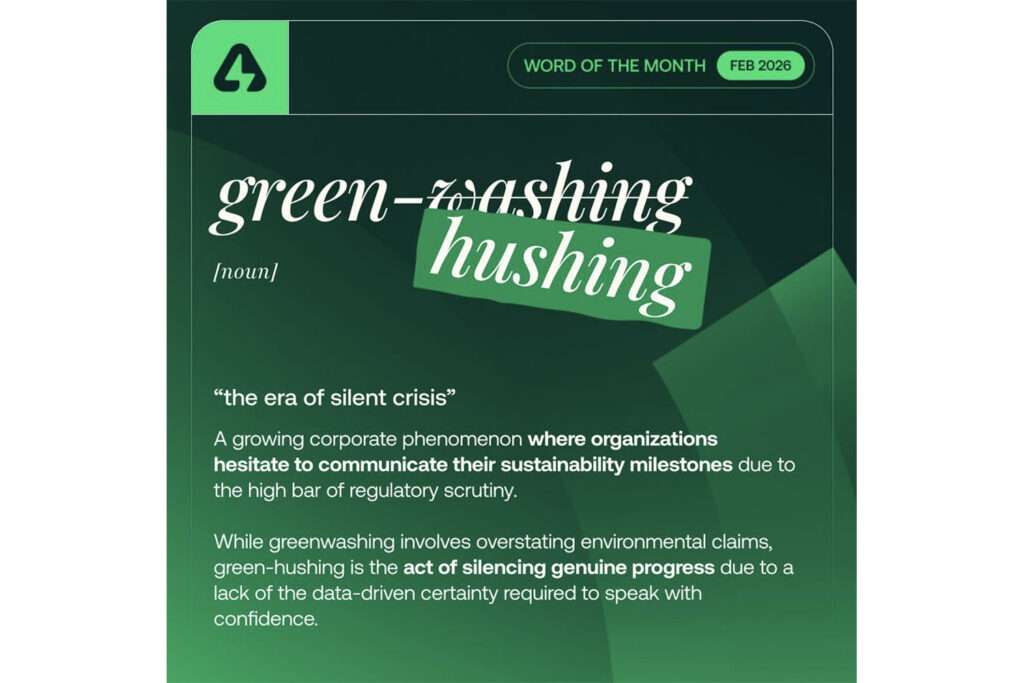
1. Greenhushing Has Been the Near-Universal Corporate Strategy for Coping
As he provocatively points out, “Try to think of companies or CEOs that have spoken out against anything this government has done. A handful pushed back on tariffs once they got too large and unpredictable to ignore. A very few, most notably Costco, showed some spine on continuing diversity in hiring.” This has been truly dismaying. No corporate backbone.
He goes on to say, “But on the gutting of environmental regulations, removal of support for clean tech, rising power of oligarchs, vast corruption enriching the president’s circle, or threats to the rule of law? Silence.” Wow, what an indictment.
It’s painful to acknowledge, “In the corporate sustainability realm, the quiet has taken a toll. What began as laying low while continuing most of the work has evolved, this year, into some big brands eliminating sustainability departments and many demoting or underfunding it.” That’s not quite the commitment so many companies previously heralded in their PR.
2. Companies Fear Attention, Mostly from the Right
What we’ve witnessed is rather shocking: “Companies have worked hard to reduce public displays of anything that might be called sustainability or, worse, ESG. Right-wing influencers have been part of the pressure driving companies underground.”
As if that’s not enough, he points out that from his conversations, “the bigger concern companies have is about GOP politicians, at the federal level and in GOP-led states where attorneys general have pursued a path of intimidation. The legal threat has been real.”
He does acknowledge that he has heard about “pressure on issues Democratic Attorney Generals (AGs) or environmental groups care about, like greenwashing and green claims. But this is not a ‘both sides’ argument. The difference in pressure and legal outcomes is substantial.”
What’s even more painful is that some corporations “have settled cases around DEI, ESG, and net zero statements or programs,” like:
- IBM paying $17 million and Starbucks $1 million to Florida to settle government claims about DEI programs
- “On the greenwashing side, DWS, Deutsche Bank’s asset management arm, paid $19 million“
- Agriculture giant JBS paid $1.1 million for net zero claims
While these amounts may be relatively small, they still send chills down the necks of CEOs and their attorneys, enough to make most quiet. And there are so many examples of media giants like CBS and major DC law firms settling for vast sums and then joining the silence. It’s been an extremely effective strategy by the Trump administration, with echoes of McCarthyism.
Meanwhile, nonprofits like As We Sow and CERES have been targeted with expensive, time-consuming lawsuits by the administration for their shareholder advocacy requesting companies address climate change.
However, Winston warns, “The bigger threats are cases from a hostile government with leverage over a company’s costs or business model. For example, eleven (and later, thirteen) Republican AGs sued investing giants BlackRock, State Street, and Vanguard over an alleged conspiracy to hurt coal through, in part, setting net zero goals.” When you see giants like that bow you know we’re in deep trouble.
They’re mired in antitrust action that “threatens an ESG-investing sector with hundreds of billions in assets. Vanguard settled for $29.5 million this year, and also agreed to stop pushing portfolio companies to reduce emissions and to stay out of climate-focused investor groups (like the Net Zero Asset Managers Initiative and Climate Action 100+).” SAD.
Winston concludes, “So some fear of reprisals is justified, but it seems to me (though I’m no lawyer) that companies have over-complied, worrying about threats that often fizzled out.”
The Tides May Be Changing But Maybe Not So Fast
We the people spoke on November 3 with such force that the tides may be changing before our very eyes. But Winston warns us to temper how fast:
“Let’s not overstate what will change at the federal level. A Democratic Congress can constrain the president somewhat but won’t pass anything over his veto, which is why the state swings matter so much.”
On the other hand, there is joy and celebration in the electoral defeat of Texas AG Ken Paxton, one of the prime architects of so many of the attacks on sustainability, including the big antitrust suit against investors.
Winston says, “With the other big swings in Texas — Dems took the governorship, AG, state house, and all other state-wide offices on the ballot — the dynamics clearly shift. Companies operating in Texas, and the six states with new Democratic trifectas (along with 5 states that lost GOP trifectas), should face far less state-level risk for pursuing sustainability goals. Instead, they will likely see policies that encourage a transition to clean tech or support higher wages.” Sometimes when you’re down, just getting the boot off your back feels great.
What Happens Now? Keep Hushing or Come Out of the Closet to Sustainability Sunlight?
Winston wonders, “So what should the C-Suite conversations, heavily influenced today by PR and Legal, look like now? The fears of right-wing reprisal, particularly from the president, that have driven two years of silence could now be balanced out more. At the state level, the pressures will lean toward sustainability, so companies should expect at least more balance, if not some reversal.” Yay for us! Dawn may be coming after the long dark night.
So, the big question is how companies will respond. Winston posits, “Given their behavior for the last two years, will companies stay quiet about more progressive policies to avoid getting on the wrong side of new leaders? If history is any guide, companies comfortably push back on liberal priorities because they’re seen as big-government intrusion (whether the neoliberal ideal of a tiny government is actually better for the economy is a topic for another day).” What would you do if you’re the CEO?
He honestly warns, “A cynical answer to whether companies will come running back toward sustainability is ‘I won’t hold my breath.’ But a return to sustainability could be more subtle — reinstated budgets and headcount, more public statements of support for sustainability, and more partnerships out in the open.” That’s at least a start.
The Optimistic Case
OK, now we move to the hopeful. Winston argues there are “two big enablers of a renewed sustainability agenda”:
1. “The real drivers of sustainability have only gotten stronger. Corporate sustainability was never really a response to what Greenpeace wanted, or whether Democrats were in power. The true drivers are existential threats and opportunities.
“The retreat was a bet on near-term political and business risk (and not a small amount of fear). The drivers are biophysical and societal, and they’ve kept moving. Companies have to address climate change because, well, there’s climate change.
“Those that aren’t redesigning supply chains for a world that’s much drier and hotter in some places and wetter in others will regret it. And diversity wasn’t just a response to threats to Black lives. It was a smart strategy for attracting talent and customers in a rapidly diversifying world.” These are all very well argued and convincing points.
2. “We can use some of the logic of the retreat to reverse course. Far more sustainability people find themselves in comms or legal now. In a twisted way, that could be a boon. Legal’s job is largely to reduce risk and a patchwork of state rules swinging with each election isn’t a great operating environment. As of January, 75 percent of Americans will live under a Democratic governor. This is a new world.
“So we can use some of the same logic that’s driven the retreat…don’t get on the wrong side of those in power. But even better, we can encourage companies to engage on policy, pursuing sustainable laws that help the whole sector cut its footprint or close the loop. My Net Positive co-author and I call this ‘net positive advocacy.’” This is the kind of reframing we need.
I love Winston’s always systemic thinking in which he connects all the dots. He poses this: “It’s worth asking execs now, which political risks you’re taking into account or pricing in? What’s the price of inaction on issues that new leaders, and many voters, are moving on (e.g., do you have a handle on your AI footprint)?”
The Ball is Again in Our Court to Shift the Political and Business Winds
Winston soberingly reminds us, “A great deal has to happen between this election and real change. The current president is in the gilded Oval Office for two more years with vast, concentrated power that he and his enablers are not afraid to use.”
Yet, our load is far lighter now as he points out. “But who’s in charge at the local and state levels has changed in a big way. Companies would be wise to reconsider two years of aggressive inaction and silent hostility to sustainability. As a wise man said, ‘the times they are a-changin’.”
Indeed they are. But now is no time to relax. It’s really our job as citizens to shift the direction of the wind so it makes it easy for both elected and business leaders to do the right thing.
We did it at the ballot box but we need to continue doing it in town hall forums, letters to the editor, social media posts, daily conversations and, yes, our support and donations for groups that are calling for change. There are so many possibilities for making a difference.
This election saw a re-awakened youth energy and vote that could be harnessed to call for corporate sustainability through their use of social media and job interviewing. Past studies have shown less responsible companies have to pay more to get talent while the inverse is true.
Young people can simply ask about the company’s corporate sustainability efforts. As more and more raise questions they can send important signals to recruiters, and, if it becomes part of the young person’s job decision, help companies do the right thing.
Let us know if you’re now more hopeful, hopeless, checked out or ?