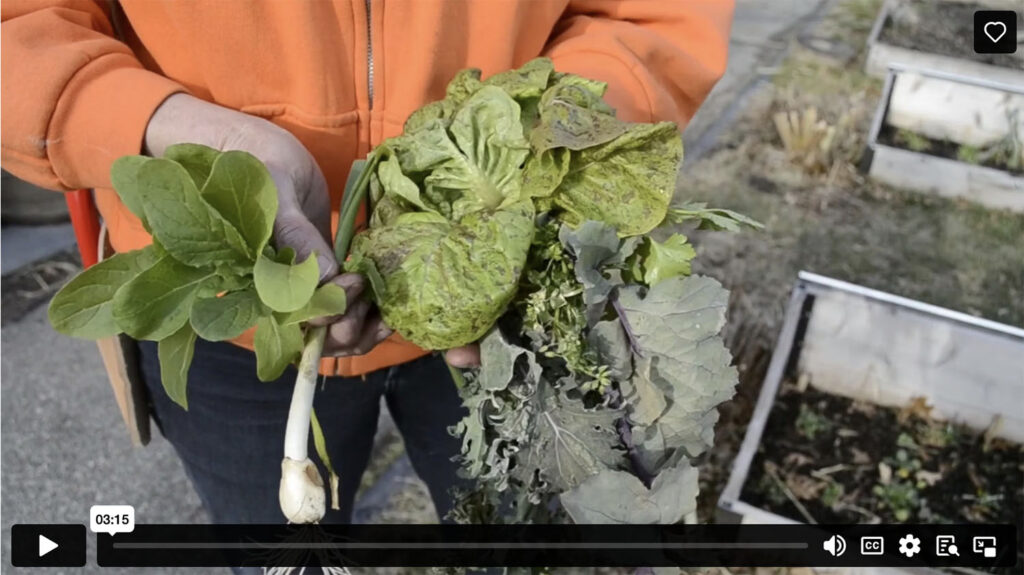
Essentially a bottomless box with a clear or translucent removable top, a cold frame (like a greenhouse) collects and traps solar energy and converts it to thermal energy (heat). This video from Brooklyn Botanic Garden explains. Credit: Brooklyn Botanic Garden
By Alliance Communications Coordinator Amy Durr
It’s a world gone mad when lettuce isn’t safe to eat. Iceberg lettuce, that most innocuous of green leafy vegetables, has become a villain of Summer 2026.
Foodborne Parasites Can Wreak Havoc in Monoculture Farming
The cyclospora outbreak, which began in May, has me rethinking iceberg lettuce. “Cyclospora is a foodborne parasite that can cause severe gastrointestinal illness. It has been linked in the past to fresh produce such as herbs, salad greens and berries,” according to UC Davis Health.
Our monoculture food systems are susceptible to all kinds of threats including pests, plant diseases and extreme weather. Growing just one crop over large areas creates a fragile system where a single problem can wipe out the entire harvest. More broadly, this same monoculture model drives biodiversity loss, degrades soil, and depends on the fertilizers and pesticides that do further environmental damage.
But fortunately we have options, especially when it comes to easy-to-grow foods like green leafy vegetables. Farmers markets, co-ops and other local outlets give us the option to buy foods grown on a smaller scale. If you get to know your local farmers, you can even talk to them about how they keep key nutrients in the soil, which translates into healthier vegetables.
But even simpler is growing them yourself.
August Is Prime Time for a Second (or First!) Planting
It may feel odd to think about planting now. By August, strawberries and blueberries are done for the year in many parts of the country, corn cobs are fat on the stalks, and growers are babysitting their tomatoes and hoping for rain during the hottest days of the year.
But August is the perfect time to plant a second crop of cool-season vegetables. There are many plants that will endure the hot days of August and September and happily keep growing as the days cool into fall. A short list includes:
Leafy greens: Spinach, kale, Swiss chard, lettuce, arugula, bok choy Root vegetables: Radishes, carrots, beets, turnips Brassicas: Broccoli, cabbage, cauliflower, Brussels sprouts (start brassicas as transplants when possible)
Dipping fall temperatures heighten the sweetness of cold-weather crops.
Skip the big box store rack and buy seeds online from an heirloom seed company instead — you’ll get varieties suited to your growing zone, and most companies are happy to answer questions. For hyper-local options, Etsy and Facebook Marketplace often have independent growers selling small-batch organic seeds and seedlings from your region.
Don’t Stop in October – You Can Grow Greens All Winter
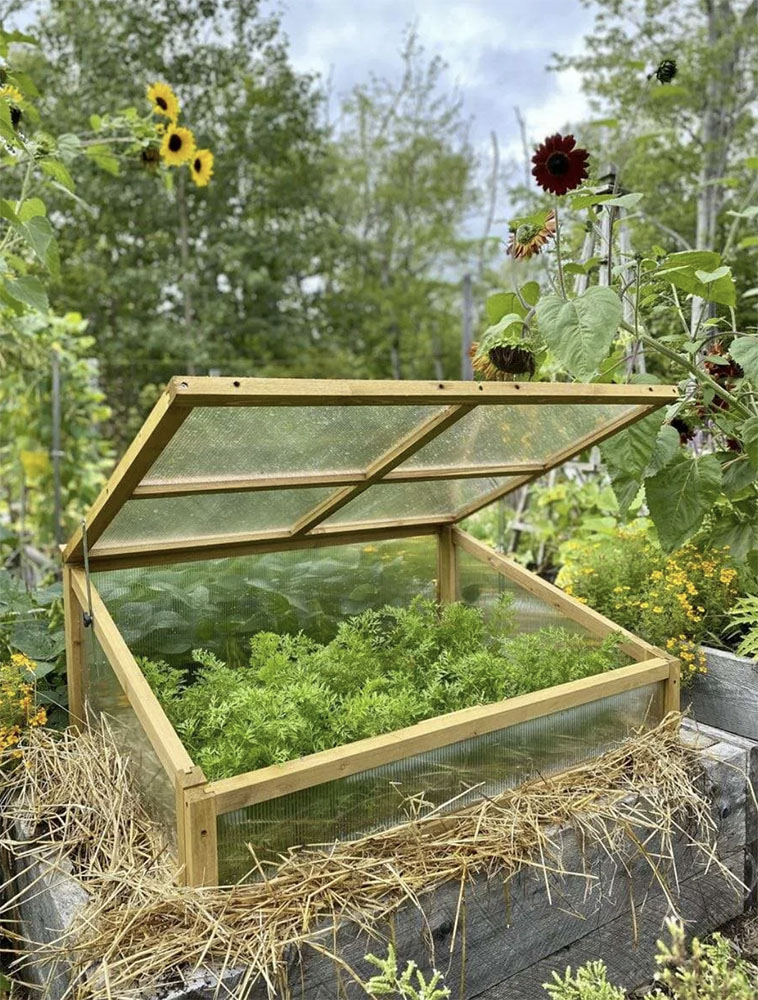
Professional gardener and author Niki Jabbour, author of Growing Under Cover, harvests winter carrots inside a cold frame setup in her Nova Scotia garden. Credit: A Way to Garden
A little old-fashioned self-reliance is worth borrowing. Victory Gardens kept produce coming out of backyards through both World Wars, with cold frames and root cellars doing the off-season work refrigerated trucks do now. We can recapture the practical knowledge of the early 1900s and repurpose it for today.
Many of us no longer have root cellars, but cold frames are easy and can be cheaply constructed. Essentially a bottomless box with a clear lid set right over your garden bed, they trap heat during the day and slow heat loss at night, often keeping the soil 10 to 15 degrees warmer than the outside air.
That’s usually warm enough to keep spinach, kale, and other hardy greens growing through a Zone 5 or 6 winter. especially if you also stagger plantings every two to three weeks through fall so a fresh round is always coming up behind the one you’re harvesting. Floating row covers and low tunnels work on the same principle at a smaller scale — cheap, quick to build, and often enough protection in milder climates.
What works for me in Zone 5b/6a may not be exactly what works for you, but between row covers, low tunnels, cold frames, and mini-greenhouses there’s a low-cost option for every climate. (If you want more ideas, I’ve collected some on Pinterest.)
Note: Cold frames are used in Plant Hardiness Zones 3 – 10 for season extension. In Zones 1 – 2, gardeners can use passively heated greenhouses, which also can also be DIYed inexpensively.
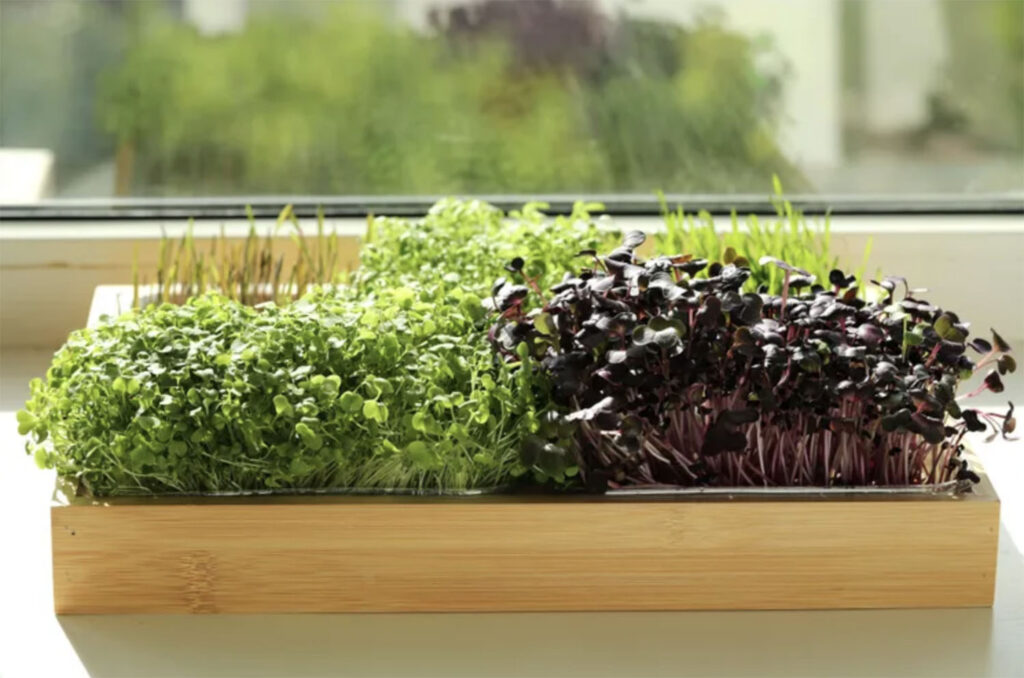
Many greens thrive indoors, where temperatures are steady and pests are practically nonexistent. Choose plants that are compact, fast-growing, and tolerant of lower indoor light. Credit: Liudmila Chernetska via Food & Wine
If a cold frame is more than you want to take on, leafy greens can be grown in containers. Or try growing nutrient-rich microgreens inside. “Greens and herbs are really well suited to indoor cultivation because they grow quickly and don’t require as much light as other crops,” says Alexandra Jones, a Penn State Master Gardener based in Philadelphia.
What You’re Really Growing
None of this makes you self-sufficient overnight, and it isn’t a replacement for farmers markets or grocery stores. But every bed of homegrown greens is food that never rode in a truck or touched a processing line. And remember: produce starts losing nutrients the moment it’s picked, so what you grow yourself is often more nutritious than what’s shrink-wrapped at the store.
In a summer when even iceberg lettuce made the news, there’s a small, real form of food security you can start building this week: buy a packet of spinach seed, mark two planting dates three weeks apart on your calendar, and get going.