
By Eleanor Hulan, Alliance Intern and Public Transit User since 2014
My name is Ellie and I’ve been a public transit user since high school.
I’ve experienced public transit in Madison, Boston, and, for the last 5 years, the Twin Cities. I commute by bus and bike, with ride shares sprinkled in when absolutely necessary. I think this is a viable way to live, but I recognize it isn’t possible for everybody to embrace a fully car-free lifestyle.
However, I do believe it is possible. Additionally, it is beneficial – emotionally, health-wise, environmentally and financially – for most people to incorporate public transit into their life in some fashion.
My Journey One Winter Day
I take the B line bus with a friend to St. Paul’s Union Depot on a December day significantly below freezing. Inside, the heat is on full blast and I find myself too warm in the 5 layers of coats every conscientious Minnesotan is required to leave the house with. I unzip the top layer.
By the time we get to its final stop at the Depot, the bus is nearly deserted. Beside us, there is only one other person.
As we exit, the driver tells us, ‘Have fun!’ After the nearly-deserted bus, we encounter hundreds of people, bundled and bedecked in holiday colors or the sports gear of various Midwest teams. We’re all lured by the holiday market’s mulled wine, handmade ornaments, Norwegian ribbe, cookies and hot chocolate. Holiday cheer prevails, despite the sub zero temperatures.
You may be wondering, what does all of this have to do with public transit. You’ll soon see.

Ask Not What Your Country Can Do for You, But What You Can Do for Public Transit
At the holiday market, my friend and I overhear a group complaining about downtown parking. We share a somewhat incredulous glance; There is a solution that could not be more obvious. Take public transit and avoid the hassles and costs of parking.
Once upon a time, the Union Depot served as a bustling, gorgeous transportation hub for trains, buses and trams. Most people had no need for a car, and the space brought people together for community celebrations.
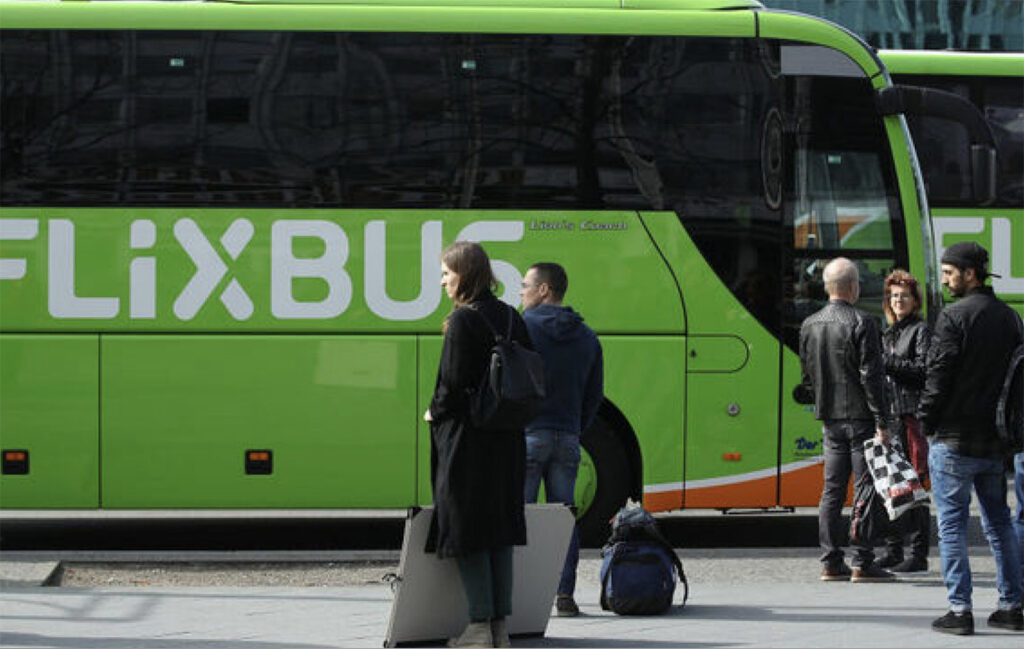
Today, the Depot still serves as a multipurpose transportation hub, hosting Amtrak, Greyhound (now FlixBus) and Jefferson Lines, while also connecting to a generally reliable, convenient, cheap and safe bus line. But why do few people take public transportation to get there?
On top of its serving as a wonderful gathering place and transportation terminal, I love that it hosts a free lending library, mostly stocked by Twin Cities library discards, with dozens of books atop a large model train. Such a deal, free books for commuters’ entertainment.
Why is no one else taking advantage?
Why will so many Minnesota residents buy mittens at a bus station, but not take a bus?

Union Depot’s Vibrant Beginning to Challenges for Long-Haul Transit
St. Paul Union Depot was originally constructed in 1881, a transit hub for the railroads that were so important to the US economy of the 1800s. In 1913, after a fire, it was reconstructed, hosting a conglomerate of nine Midwest railroads. It hosted the third largest mail route, after New York and Chicago, and served as a common meeting place for the entire population, rich and poor.
More recently, Amtrak’s high speed Borealis Line from St. Paul and Chicago hosted 100,000 riders in 22 weeks of service in May of 2024. Things looked promising.
However, in May 2025, House Republican Transportation Chair Rep. Jon Koznick (R), led an effort to kill a proposal for a similar line, the Northern Lights Express, between St. Paul and Duluth. He gleefully proclaimed that his plan would make this train line “effectively dead.” A longtime opponent of public transit options in Minnesota, he instead wanted to divert funding to roads. He believed public transit is wasteful and unaffordable.
In my Madison hometown, more than 10 years prior, WI Gov. Scott Walker (R) provided a blueprint for the decimation of public transit. In 2011, he rejected over $800 million in already designated federal funding for a high speed rail that would have connected Milwaukee and Madison to Minneapolis and Chicago. He said almost the exact thing Koznick did, “My preference is to fight for that money to have it spent on roads and bridges.”
Why Are These Men Wrong? Transit Saves Money and Time While Improving Our Mood
The landscape around cars and the resources they use has clearly changed since Koznick’s attack on public transit in May 2025. The US recently began a war with Iran. Gas prices are spiking, given the months-long closures in the Straight of Hormuz. Analysts predicted oil prices per barrel of $150 – 200 in March, but numbers continue to hover around $120, leading to gas prices well over $4/gallon.
We no longer have the low gas prices drivers have become accustomed to. It’s time to remember the multiple benefits of public transit. AAA estimated that the annual cost of owning a car in 2025 was $11,577 per year. This figure was prior to the war in Iran. An unlimited Metropass in the Twin Cities costs $83 a month. But there’s no need to commit; Alternatively, you can pay $4 for 24 hours of rides, or $2 for 2.5 hours. Some cities, like Richmond, Miami and Los Alamos, provide access to public transportation completely free.
Public transit also significantly reduces an individual’s carbon footprint. In the Bay Area, the BART Sustainability Department found that taking their train system to the same place every day for a month emitted less CO2 than driving this route only one time.
I’ve also personally observed psychological benefits. People who don’t routinely take public transit will not know the satisfaction of plopping down in a comfortable, climate-controlled seat to read a book or listen to a podcast while outside, rush hour traffic stalls. During certain times of day, despite stops, the bus or light rail can be faster than navigating traffic and the construction road closures that are the norm in Midwest summers. In cities like New York, this may almost always be the case.
Or, if you’re a chronic homework or project procrastinator, commuting via transit is a great time to finish up work. It’s not exactly possible, or at the least is unsafe, to drive a car while holding a pen and notebook. Even if a bus commute takes twice as long as driving – and I won’t lie, this is certainly possible – it can be made up for with work hours.
I’ve also met people I never would have otherwise. On the 87 back from the grocery store, I talk with a driver about the difficulties of his job – traffic flow not respecting him, for one. He owns a fledgling pastry business, and says the best ice cream he ever had is from a certain company headquartered in Wisconsin. I cut him off with a guess that turns out to be correct about the name of the most popular flavor and company – my first job was scooping ice cream for this business in Madison.
The Benefits of Long Distance Public Transit Versus Driving
I’ve often taken a FlixBus from Union Depot to the UW Madison campus, then a Madison city bus to my final destination – typically, my parent’s home (a short trip as Madison isn’t that big.) This ticket is generally in the vicinity of $40. The average MPG in the US hovers around 27, putting this trip of a little over 250 miles at about $42.
However, according to AAA, maintenance alone adds 10 cents/mile. Consequently, you’d need to add $25 to the $42 gas cost, making the one-way trip $67. Clearly, you save $25 by taking public transit.
Driving, the route is a little over four hours door-to-door. The fastest Flix route clocks in at five hours and five minutes.
So, public transit saves at least $25, but takes an hour longer. However, it frees you to take a nap, read a book, work on your laptop via the bus WiFi or text without the frustration of congestion or fear of accidents.
Speaking of accidents, public transit is far safer than travel by car:
- Traveling by public transportation is 10 times safer per mile than traveling by automobile
- A person can reduce his or her chance of being in an accident by more than 90% simply by taking public transit as opposed to commuting by car
So my conclusion regarding Public Transit vs Cars: Time – slight loss. Time utilization – up significantly. Safety – up significantly.
But, the difference between driving and public transit is huge in terms of climate change. Transportation is the largest source of carbon emissions in the United States. 88% of these emissions come from cars and trucks.
According to Scientific American, on average, cars emit almost one pound of carbon dioxide per passenger mile while buses at full capacity emit 0.18 pounds of CO2 per passenger mile, making them comparable to rail but at a much lower cost. So there is a net 80% carbon reduction from full public transit versus individual passenger vehicles.
Every time I see figures like these, I think of my experiences, and fervently hope that some day US citizens will try to change their means of transportation. As Steven Higashide, director of the Clean Transportation program at the Union of Concerned Scientists, concludes, “I think the bus is often overlooked as a climate solution because it is overlooked as a solution, period.”
Long Distance Public Transit Versus Flying
I will admit to having taken the MSP to Madison flight once, when there was a steep discount and the timing made more sense. The lowest price I can currently find is $250, with a ride time of about 50 minutes.
This, of course, does not include time spent getting to the airport, passing through security, and making it to a terminal an hour early, not to mention the labor of transferring your toiletries into smaller bottles and removing any would-be security triggers from your bag. I would estimate the real-time cost of flying is at least 4 – 5 hours, especially with long security lines.
Meanwhile, on the FlixBus you can bring a soup or other liquid food from home, your home-filled water bottle and as much full-sized shampoo as you want!
But the big difference is the carbon cost of flying versus single passenger car travel. Flying, as many of us know by now, is one of the most carbon-intensive activities an individual can participate in. It wrecks even the best environmentalist’s carbon budget with just one flight. CO2 emissions per passenger per hour have been estimated at 250kg. Short haul flights, like the one I mentioned, are particularly harmful due to excess fuel consumption on takeoff and landing. Taking a bus instead of flying can reduce one’s carbon footprint by 78%.
Public Transportation’s Surprising Economic Benefits
In case you’re not yet persuaded about public transit, you should know the American Public Transportation Association documents that:
- Every $1 invested in public transportation generates $5 in economic returns
- Every $1 billion invested in public transportation supports and creates approximately 50,000 jobs
- Every $10 million in capital investment in public transportation yields $30 million in increased business sales
- Every $10 million in operating investment yields $32 million in increased business sales
- An estimated $39 billion of public transit expenditures flow into the private sector
- Home values were up to 24% higher near public transportation than in other areas
It’s Time to Reframe Travel in the US
The 2021 US Census found that only 3% of Midwesterners say they commute via public transit. The numbers are highest in the Northeast, with New York being an obvious outlier, but numbers still average out to only 5% of Americans commuting by bus, train or subway.
Given the cost of living and wage stagnation in the US, I can’t imagine that owning and maintaining a vehicle is the most financially viable route for the other 95%. But owning a car is so ingrained in the US ethos of ‘adulthood’ that not owning one is barely considered an option.
If you’re not ready for overhauling your commute and switching to city buses, start by looking into long-haul bus options as an alternative means of travel. You may be surprised at how many cities they service, even rural areas without a robust city bus network. Check the FlixBus, Greyhound, Jefferson Lines, Megabus and Amtrak websites next time you plan on making a long drive to visit a friend or go on a work trip.
If you are ready to explore an alternative way of commuting, check out the “Transit” app. It shows stops by you, route times, precise times of arrival, and estimated fullness of a bus or rail system.
And to all the people at St. Paul’s holiday market, with all their cheer and enthusiasm for what Union Depot hosts during the holiday season, I would suggest transferring just a little of that enthusiasm to what Union Depot does, at almost every hour and on every day of the year. Explore a new way of viewing your town or city, make connections with the people and places around you, and take pride in finding a more sustainable way of life.