By Teri Reitan, Alliance for Sustainability Business Program Director
What will 20 used plastic bottles get you these days?
For most of us, recycling 20 bottles means little more than the satisfaction of knowing we have done a small part to help the environment.
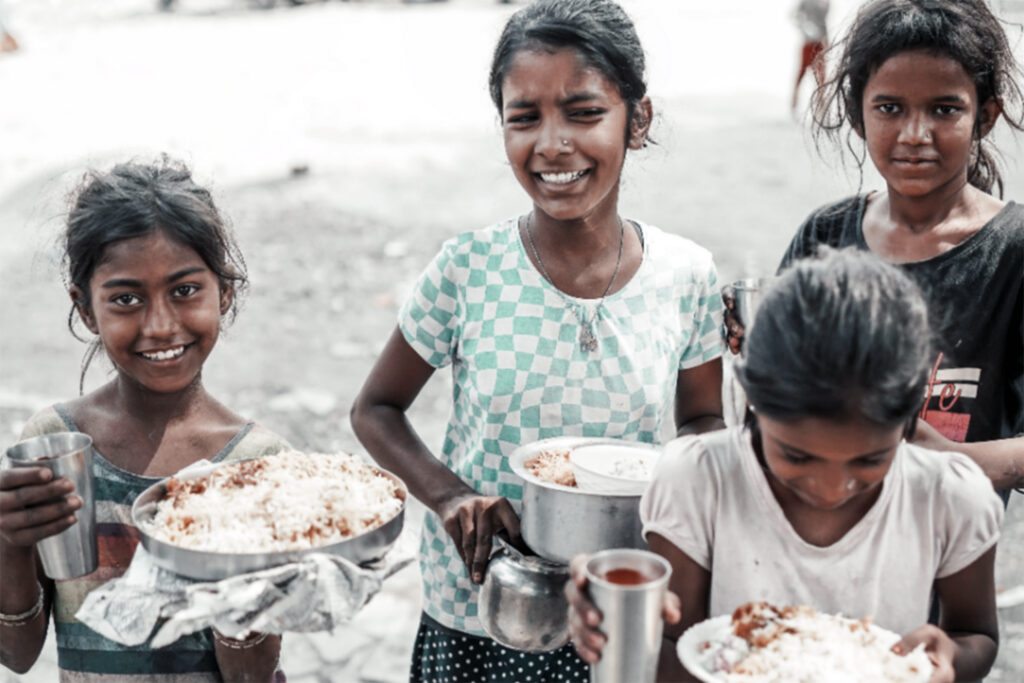
For folks in communities in Nicaragua, India and Ghana those same 20 used plastic bottles buy them a freshly-made meal. This is thanks to an innovative Zurich-based nonprofit called Buy Food with Plastic® that seeks to end hunger, create jobs and protect the environment. Just as important, this work is happening because local communities have asked Buy Food with Plastic (BFWP) to come to their communities to form these sustainable partnerships.
Local Recycling Plants Turn Waste Plastic into Useful Products Sold Online
Providing freshly made meals is only the beginning of what this nonprofit does. BFWP helps communities create sustainable circular economies via simple plastics recycling plants. These recycling plants provide jobs for local residents with higher than Fair Trade standards in pay, worker conditions, and hours worked. The plastics that are more complex to recycle get shipped to larger recycling centers.
They also sell the multi-use and repurposed recycled and upcycled products online that are made in their plants. The Nicaragua program sells surf combs, ice scrapers and a stacking tower game called UP made from upcycled plastic bottle lids. In Ghana, they’re selling outdoor blankets and cosmetic bags made from plastic sachets (recycled HDPE) and recycled cotton.
Impactful Sustainability and Multiple Unforeseen Health Benefits
Their impact so far includes 4,234,230 plastic items reprocessed, 102,525 meals provided, 106 jobs created and 580,000 people reached.
The BFWP 6 Core Programs include 1. Plastic for Meals, 2. Environmental Education, 3. Plastic for Income, 4. Plastic Reduction, 5. Circular Economy, and 6. Career Opportunities and Training.
In a conversation I had with BFWP Co-CEO and Co-founder, Anna Gracia Herbst, she emphasized, “One of our key priorities is scaling our model in a way that stays both impactful and sustainable. We have a clear understanding of what it takes to grow, and the potential on the ground is significant.”
She continued, “The key challenge lies in securing the right long-term financial partnerships, which allow us to plan ahead, strengthen our local teams, and expand our impact in a meaningful and lasting way.”
Anna also mentioned an unintentional positive impact, “One moment that really showed us the impact of our work came from a community member in Elmina, Ghana. She shared that since we started our operations, there had been a noticeable decrease in illnesses.”
“At first, we didn’t fully understand the connection, but she explained that mosquitoes, which spread diseases like dengue, often breed in discarded plastic bottles. With less plastic waste in the environment, the mosquito population declined, along with the spread of disease.”
“It was a powerful reminder that circular solutions can create ripple effects far beyond what we initially imagine,” she added.
Sustainable Funding and a Circular Economy, from Chocolates to T-Shirts
Their goals by 2030 are to provide 5 million meals and recycle 700 million plastic bottles and sachets (pouches). BFWP will also continue to make and sell other sustainable community-made products that are critical to help fund their freshly-made meals and other community programs. They’ve developed a range of partnerships with various businesses who help subsidize the BFWP programs.
For example, they work with the St. Jakob Foundation in Zurich, who sells vegan Pavé Chocolates to fund their program of integrating people with disabilities into society and providing employment. They split the funding received from the sale of the chocolates with BFWP. This is another example of creating local circular economies to help communities in need.
Additional funding sources for their 6 core programs include making and selling T-shirts, a thermos flask (to reduce the use of plastics), and a tote bag (the latter made from 80% recycled cotton and 20% recycled polyester). All products sold online disclose their true cost, the sustainability practices and standards followed, and the various certifications obtained.
BFWP Is Innovating Sustainability Solutions
BFWP’s innovation seems nearly unlimited, from creating a “Charity Gallery” for Co-Working in Zurich to a page on their website dedicated to Crowdfunding Projects for sustainable development. Each of the projects is thoughtfully designed to empower community members to help make their business and economic dreams come true.
There are at least 8 crowdfunding projects they’re helping. For example, one of the BFWP’s local cooks in Ghana, Augustina, now has a dream to open her own restaurant that anyone can support.
Follow This Rising Star as They Continue to Innovate Sustainability
Buy Food with Plastic® also provides a model that is hopeful, ambitious and accountable while being deeply people- and planet-centric. They’re proving it’s possible to create equitable jobs and reduce waste while being transparent, local, humane and lasting. They demonstrate thorough and ethical implementation of circular economies through sustainable development for communities and people that have been overlooked.
As they work toward their 2030 goals, their model is an example worth watching – not only because of what they’ve set out to achieve, but because of how thoughtfully and respectfully they are choosing to achieve it.