By Eleanor Hulan, Alliance Intern
Summer is a peak travel season for vacations, especially for families with younger children who still get the months-long break, and the US travel industry continues to grow. Last summer was the highest travel season ever documented with up to 54,000 flights a day, per the Federal Aviation Administration.
This year, I’m not an exception. I’m taking a trip to New York next month to visit a childhood friend I haven’t seen for 7 years. As far as reasons for contributing to the massive emissions generated by air travel go, I think it’s a pretty good one. And, although I’m a huge advocate for rail and bus travel when possible, I don’t think we need to flagellate ourselves for taking an occasional flight.
My climate concerns do worsen when I engage in activities I know contribute to warming, and I’m sure the same is true for the other 85% of young people with climate anxiety. We, and anybody else who would like to practice sustainability generally, need to find ways to reduce our net carbon impact when traveling.
Brief flights are the worst culprits for emissions due to the inefficiency of fuel usage for the short time between take-off and landing. When possible, before price-comparing between airlines, consider something much cheaper: Amtrak and bus lines. There are robust networks between cities in the Northeast. The same is true for traveling within much of Europe.
If and when you book a flight, compare airlines who have set emissions and sustainability goals. Delta has contributed $1 billion to sustainability initiatives, and has an ambitious zero-GHC emissions by 2050 goal. JetBlue has the same goal by 2040.
It’s also important to give thought to the difference between hotels – and not just price. Many large chains have been implicated in bad labor practices, particularly impacting women and people of color. VRBO can be a good option depending on the area, especially owners who have a property or two, not vast rental conglomerations.
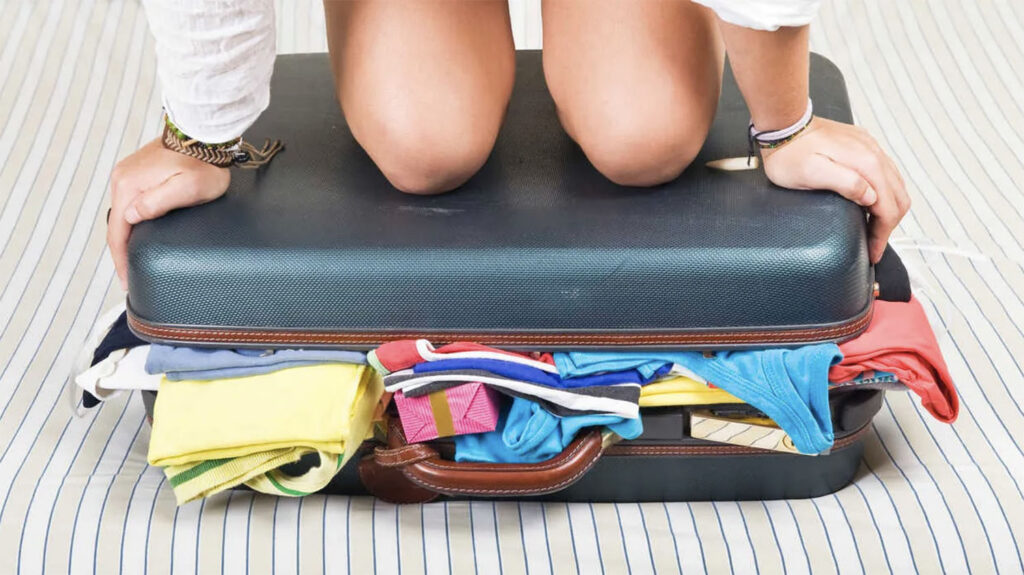
Once all those details are squared away and it’s time to start packing, try following some of these tips from Wired.
For Beach Trips
- Make sure the sunscreen you pack (ideally in a reusable, PFAS-free container) is reef-safe. Currently, the only sunscreen category that fulfills this spec is mineral, so make sure you look for this designation. We have some solid product recommendations.
- Speaking of reusable containers, there are a variety of options with safer materials than plastics. However, they may not be budget friendly or only accessible via shipping. Something I like to do is reuse “travel-size” containers I already have: Lip balm tubs work well for sunscreen. Shampoo in a former hair mousse container. Basically, if you have a plastic container that might otherwise go in the trash, rinse it well and use it! Just make sure they’re under 3.4 oz (unless you’re checking a bag).
- Those of us in 7-month winter climates may not have too many bathing suits laying around, creating a preference for ordering online where the options are numerous and the styles endless.
- Try to shop in-person when possible. Wired points out that with online orders, even if you return, these products often end up in landfills.
- I’m also a big advocate for borrowing! Check in with friends your size who may be happy to do a loan or swap.
- I would also propose an even better solution: shopping upon arrival. There will be far more options within walking distance, and it helps the local economy. For tropical climes used to welcoming tourists, there are almost always a variety of local businesses selling swimwear at cheaper prices.
- For non-swimwear, look for linens and cotton with sustainable, fair-trade labels. Buying second-hand is a great option.
- Bring a reusable beach bag. This one is just common sense. What’s better for stuffing in towels, changes of clothes, snacks, sunscreens – a plastic shopping bag or a large tote from home? I love a vacation tote bag; I think they’re more essential than a purse.
For Mountainous, Forest or Ski Trips
- Look for safe bug sprays. This is not just a climate concern, but a health one. Aerosolized sprays often contain chemicals harmful to respiratory health. Check ingredient lists to keep you and your family safe. There are some natural oil alternatives, and also some promising startups with DEET alternatives.
- Water-proof clothing is notorious for its use of forever chemicals like PFAS. These chemicals have a myriad of health risks, including cancers and neurological conditions, and remain in soil, air and water for decades. Look for alternatives. Patagonia is an accessible brand with durable, high-quality clothing options that are PFAS-free! Some other promising alternatives include fairechild and Fjällräven.
In General
- Bring a travel mug and/or water bottle.
- Pack snacks and reusable cutlery.
- Look into reusable menstrual products. In addition to their sustainability upsides, they have the added benefit of taking up less space than stuffing 30 pads into a cramped toiletry bag.
Lastly, before you head home, think about what you’re bringing back with you.
I like souvenirs as much as the next person, but I also think it’s smart to ask yourself a couple questions before purchasing:
- Could I get this anywhere? Is this a business unique to the area or a local artist, or something mass-produced?
- Is it ethically sourced?
- What’s the quality? Will it break in a few months, or is it built to last?
Consider experiences over stuff.
And finally, happy travels!