By Alliance Intern Eleanor Hulan
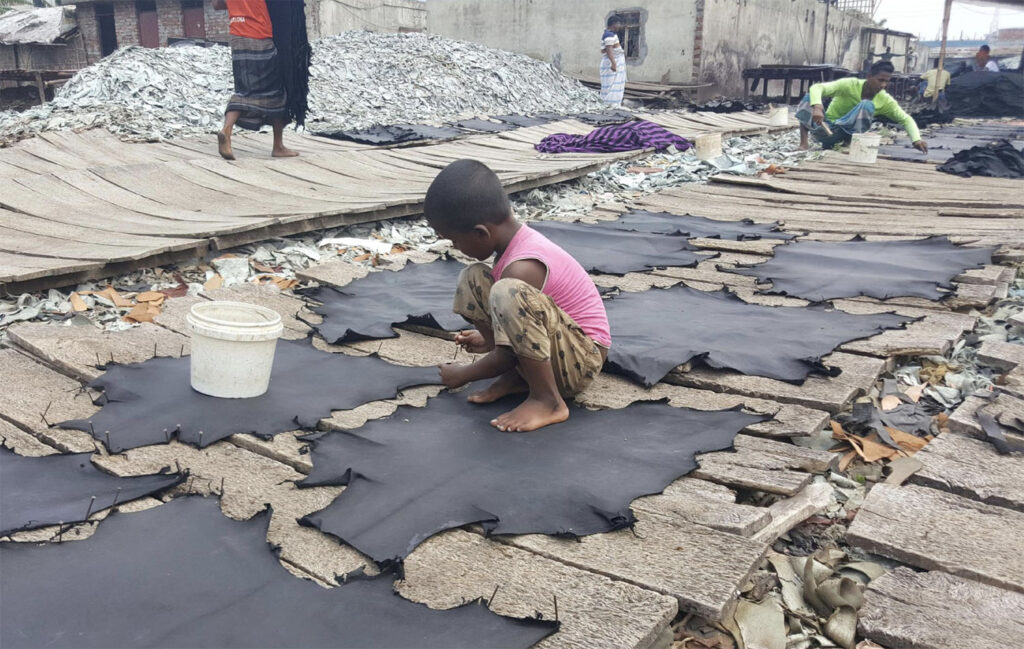
No person should have to work in the conditions chronicled in Green America’s 2026 report Hidden Hands: Child Labor in Bangladesh’s Leather Industry. And no child should have to work at all. However, 138 million worldwide still do, and the consumer economy continues to subsidize industries that engage in the very worst labor practices, directly and indirectly.
Green America’s report on the leather market in Bangladesh, with testimonies from a few of the 3.45 million children who are enslaved to this industry, is a horrifying reminder of the changes that must be made if we ever want to share in an equitable future.
It seems that there is often an utter detachment toward the shoes or belt we put on in the morning. The nonchalance surrounding who makes it, and the disregard of the human condition is chilling, but it is nothing new.
In 1905, Upton Sinclair’s The Jungle appeared in print, a testimony to the horrors of the American meat-packing industry. In the eventual novel, Sinclair used a fictional family to bring attention to an industry rife with child-labor, human rights violations, and pollution.
Half the year it would be dark as night when he went in to work, and dark as night again when he came out, and so he would never know what the sun looked like on weekdays. And for this, at the end of the week, he would carry home three dollars to his family, being his pay at the rate of five cents per hour—just about his proper share of the total earnings of the million and three-quarters of children who are now engaged in earning their livings in the United States.
This million and three quarters Sinclair mentions accounts for child workers between 10 and 15 in 1900. At least an additional quarter million were under the age of 10.
After the publication of the novel, American companies shaped up…sort of. Stricter child labor laws were put into place, and more mandates around food and worker safety were implemented. There are still many (many, many…) aspects of the labor market in the US that need gargantuan reforms, but some of its worst practices have been subsidized and offloaded to the Global South.
British rule in South Asia had the same effects: growing the previously family and community driven art of leather-work into a monstrous conglomerate of factories with despicable working conditions that target people from disenfranchised castes and religions.