By Teri Reitan, Alliance for Sustainability Co-Executive Director
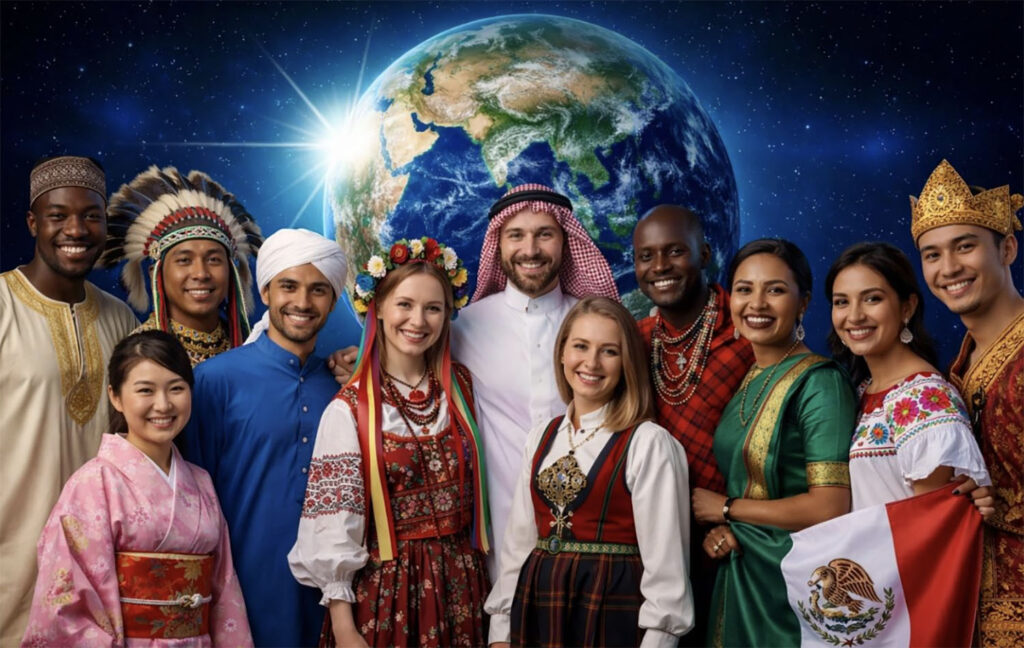
Can you imagine a world where everybody’s needs are met and we have a healthy, thriving planet? The 2026 Global Justice Report shows it’s possible and how we can achieve it.
The report’s significance is that it shows, with actual economic and ecological modeling, that a different future is materially possible. It is achievable if the world sharply reduces inequality, strengthens public services and limits warming to 1.8°C by 2100, instead of drifting toward more than 4°C under baseline trends. The report also finds that politics is making it more difficult, but we already know that.
Three Key Transformations Required
The report emphasizes this future would require three transformations to happen together: rapid decarbonization, a shift toward economic sufficiency, and a drastic reduction in inequality of income, wealth and power.
Per the report – which I think aligns with the Alliance’s vision and mission – cleaner energy alone is not enough. Nor is asking people to consume less if wealth and power remain concentrated at the top. Decarbonization and sufficiency cannot be financed or politically sustained unless the benefits and burdens of transition are distributed far more fairly.
What Could This Look Like in Practice?
The report imagines a world by 2100 in which every country reaches about $5,681 in monthly income per person (PPP 2025), while the bottom 50% of the global population increases its share of wealth from 2% to 30% and the billionaire class’s share falls from 6% to 0.05%. It also envisions shorter working hours, more investment in health and education and a model of prosperity based less on material throughput and more on human well-being.
To get there the report proposes large-scale structural reform. Its centerpiece is a Global Justice Fund, which it says should spend an average 10.3% of world GDP per year from 2026 to 2060 on climate investment, health and education. It proposes financing that through progressive global taxation — including a wealth tax up to 20% per year on billionaires and a top income tax up to 90%.
I think there are many open questions here and numerous conversations needed on how this may come about and then be governed, managed and distributed.
There are Growing Movements Towards Global Sustainability
Many may feel this is too pie-in-the-sky and unrealistic.
From my perspective, whether or not the report’s proposed financing options are feasible, what is encouraging are the growing movements the Alliance has reported on related to the increasing number of organizations that are currently following Fair Trade practices. Across the globe they are helping increase income and health in impoverished communities.
The report also calls for deeper reform of international governance and finance, arguing that today’s system remains too skewed toward wealthy countries and concentrated power. I agree that a Global Justice Fund managed by a global collaborative could help immensely in furthering global equity.
Which Countries are Most in Need of Transformation?
There is no single official ranking in the report, but across external major datasets tied to the report’s themes – climate, pollution, environmental performance, and inequality – a clear pattern emerges.
For example, Yale’s 2024 Environmental Performatnce Index places Pakistan, Vietnam, India, Bangladesh, Myanmar and Iraq near the bottom, while China ranks 156th. The US ranks 35th on that index. There are several factors involved in scoring, Russia is ranked 83rd and India is ranked 176th. Interestingly, Russia, China and India all face increasing (rather than decreasing) emissions. Clearly, we have a long way to go.
When it comes to specific climate policy, the US fares much worse. The Climate Change Performance Index 2026 shows the US ranks 65th, alongside other weak performers such as Saudi Arabia, Iran, Russia, South Korea, the UAE and Canada.
On air pollution, the 2024 World Air Quality Report lists Chad, Bangladesh, Pakistan, D.R. Congo, India and Tajikistan among the most polluted. On inequality, countries such as South Africa, Namibia, Botswana, Eswatini, Brazil and Colombia stand out, while the World Bank also identifies the US as unusually unequal for a high-income country.
There may be much we can learn from the countries that are ranking among the top across these reports: Estonia, Luxembourg, Finland, England, Morocco, Chile, Sweden, Denmark, Switzerland, and Norway.
Official Institutional Responses Are Yet to Come
Just as notable is who has not officially responded yet to the Global Justice Report that I am hoping will weigh in. There has been no verified direct official statement on the report from the UN, NATO, World Bank, IMF or OECD, although there was indirect engagement by individual officials and researchers.
This suggests that the report is new and has not yet crossed into mainstream institutional debate, even though it directly addresses the very areas these bodies shape: taxation, development finance, inequality, climate coordination, and global economic governance.
The Real Question
I think the strongest takeaway is that a better future may be physically and economically feasible through key sustainability-related transformation. The distance between today’s world and the one the report describes is not mainly a shortage of technical knowledge but rather a shortage of alignment, institutional resolution and willingness to address inequalities.
I intend to follow this closely as more collaborative conversations among transformative organizations and major institutions occur and their insights begin to emerge. I’d love to hear what your thoughts are.