
By Teri Reitan, Alliance for Sustainability Co-Executive Director
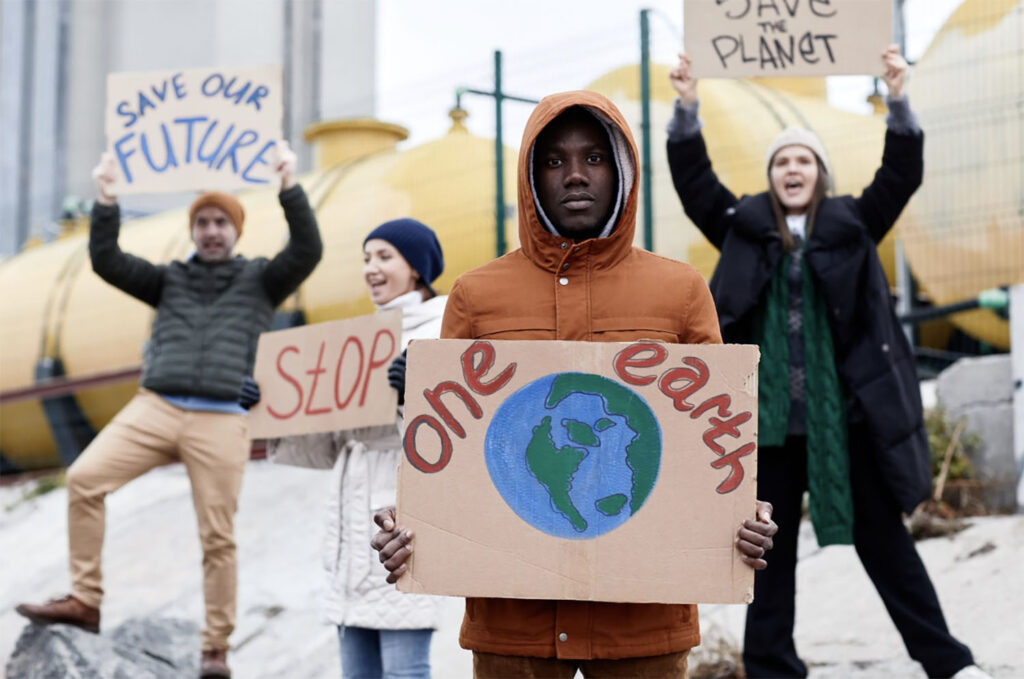
Many people who spend time with children, teens, and young adults — whether their own, their neighbors’ or their grandchildren’s — have likely noticed that climate change now carries real emotional weight. For many young people, the state of the Earth’s ecosystems is not an abstract issue. It shapes how they think about safety, fairness, health, and the future.
What shows up may be worry, sadness, anger, withdrawal or anxiety, but beneath those feelings is often a clear recognition that the world is changing and that the burdens will not be shared equally. Research suggests these responses are not unusual. Large studies have found that many young people report significant worry about climate change, and a substantial share say those feelings affect their daily life.
For some, that emotional response includes anger and betrayal toward older generations and institutions seen as having contributed to the crisis and failing to respond with enough urgency. At the same time, it is important not to reduce this to a simplistic “young versus old” story. The deeper issues are responsibility, power, and who bears the consequences.
Adults are affected too. Climate-related mental health strain is not limited to youth. Adults report anxiety, grief, stress, and chronic worry about environmental decline, and some also carry guilt about what has been lost or left unaddressed. For people directly affected by wildfires, hurricanes, floods, drought and extreme heat the emotional toll can be more severe.
Why This is Also a Health and Equity issue
Climate change is not only an environmental issue; it is also a health, equity, and community issue. People with fewer resources, less secure housing, and greater exposure to environmental harm often face the greatest risks while contributing the least to the problem.
A compassionate response has to make room for both truth and care: truth about the emotional toll of the crisis, and care for the people carrying it. Eco-stress is real, but it does not mean people are broken. In many cases, it is a human response to a difficult reality.
What The Science Says Matters Most Now
The scientific guidance on what needs to happen next is surprisingly consistent. Across recent assessments from leading scientific and policy bodies, the message is not that there is one miracle solution.
It is that the next five years need to be a coordinated push on a short list of high-impact priorities: cutting emissions quickly, building clean energy much faster, reducing methane, protecting forests and ecosystems, adapting to harms already underway and addressing climate, food, water, biodiversity and health together rather than in silos.
In short, the science points to urgency, scale and coordination — not isolated actions taken one at a time. That can sound daunting, but it also gives us clarity. It tells us where public attention, policy, investment and everyday choices can matter most.
The Bridge Between Overwhelm and Action
Even with that clarity, climate change can still feel enormous at a human level. Knowing what needs to happen globally does not automatically tell people how to live with grief, fear, guilt, anger, or uncertainty.
This is why coping matters. Learning how to stay grounded, how to practice self-kindness, and how to focus on what is within your control is not separate from climate action. It is part of what makes sustained action possible.
Research on eco-anxiety interventions points to the value of healthy routines, mindful self-compassion, gratitude, ecotherapy, and forms of active or constructive hope that help people stay engaged without denying reality.
For some people, coping also means community. Research suggests that collective action may help buffer the effects of climate anxiety by reducing isolation and strengthening a sense of agency and social support.
That does not mean everyone needs to become an activist. It does mean people often do better when they are connected to others, when they can share the emotional load, and when they can turn concern into purposeful action.
10 Ways to Cope with Eco-Stress
- Name what you’re feeling Eco-stress can include grief, anger, guilt, helplessness, anxiety, or sadness. Putting words to those emotions can make them easier to understand and carry
- Practice self-compassion instead of self-blame If you are carrying guilt, try speaking to yourself with the same kindness you would offer someone else who cares deeply and is doing their best
- Focus on what is within your control No one person can solve climate change alone. It helps to distinguish between what you can influence and what you cannot
- Stay connected to the natural world Time in nature can restore perspective, calm the nervous system and remind us that the Earth is not only something under threat, but also a source of beauty and care
- Build steady, healthy routines Sleep, movement, nourishment and daily structure do not solve the climate crisis, but they do support emotional resilience
- Make room for gratitude and beauty Noticing what is still good, beautiful or worth protecting does not minimize the crisis – it keeps despair from becoming the only lens
- Don’t carry it alone Talking with trusted friends, family, peers or a support group can reduce the isolation that often makes eco-stress harder to bear
- Turn concern into shared action Community outreach, peer education, volunteering and advocacy can build agency, solidarity and hope
- Let hope be realistic, not forced Helpful hope is not denial – it is the choice to stay connected to your values and act with care even when the future is uncertain
- Seek extra support if eco-stress is affecting daily life If climate-related worry is interfering with sleep, concentration, relationships, work or school, it may be time to talk with a mental health professional
10 Actions Individuals Can Take
- Support policies that cut emissions quickly Weigh in on local, state, and national decisions that affect fossil fuels, transportation, buildings and industry
- Choose clean electricity when it is available to you If your utility offers renewable power, community solar or cleaner electricity options, switching can help grow demand for the clean-energy buildout that scientists say is urgently needed
- Cut energy waste at home and work Efficiency upgrades, weatherization, better insulation, efficient appliances and smarter heating and cooling reduce emissions and lower strain on the grid
- Electrify the next time you replace something When a car, furnace, stove or water heater reaches the end of its life, consider an electric option if it is affordable and practical for you
- Shift toward more climate-friendly food choices where you can Small, sustainable shifts in what we eat can help reduce methane and support healthier, more resilient food systems
- Protect and restore nature close to home Support local efforts to protect forests, wetlands, tree canopy, soil, and biodiversity or volunteer with restoration projects when you can
- Use your voice and act to support methane reduction Back policies, organizations and business practices that reduce methane from energy, agriculture, and waste systems &/or begin composting to keep food waste out of landfills
- Prepare for the climate impacts already here Make a plan for heat, smoke, flooding, storms or water stress in your household and community, especially if you or loved ones are vulnerable
- Join with others rather than carrying it alone Community groups, neighborhood projects, faith communities, schools and local organizations can turn private concern into shared momentum
- Support climate action that is fair, not just fast Back leaders, policies and organizations that protect lower-income and frontline communities, because climate risks are not evenly distributed
Call to Action
If eco-stress is part of your life — or part of the life of someone you love — the answer is not to look away, and it is not to carry the whole crisis alone. Start smaller and kinder than that.
Name what you are feeling. Choose one coping practice. Choose one meaningful action when you’re ready. Share this conversation with someone else. And remember: caring for your own well-being and helping to protect the planet are not competing priorities. They’re synergistically healing.
Sources
This piece is informed by reporting and research from The Lancet Planetary Health, BMC Psychiatry, Early Intervention in Psychiatry, APA, American Psychiatric Association, UNEP, IEA, IPCC, IPBES, Stockholm Resilience Centre, PMC eco-anxiety intervention review, Minnesota Public Radio, Yale School of Public Health, and Yale Sustainability.