
By Alliance Communications Coordinator Amy Durr
The past few weeks have been heavier than heavy. I have felt their weight pushing on my chest as I try to take some long breaths.
I could not force myself to watch videos of the flash flooding in Nepal, even as I feel the need (and desire) to bear witness. I cannot read about the real-time effects climate change is having on the world’s oceans as they break temperature records.
World-wide we are breaking all kinds of records, but not necessarily the ones we might want to. Nepal’s deadliest disaster on record unfolded at the tail end of a record-breaking heat week. The summer that produced it broke temperature records worldwide — the hottest US summer on record, a tie for hottest month ever measured on Earth, new highs for ocean temperatures.
This month an Anthropic researcher publicly resigned, estimating better than a 10% chance that AI causes human extinction within the next decade, while the Bulletin of the Atomic Scientists warned that AI is reshaping nuclear and biological risk faster than governance can keep up.
That’s a lot to process, even for the most literate, news-obsessed and pragmatic among us. And when faced with a virtual wall of bad news day after day after day, our psyches sometimes take what may at first glance seem like the easy way out: we freeze.
Freezing isn’t necessarily bad, as we will see, but what comes after is critical. We can develop practices to shake off our traumas, both large and small. Doing so individually and collectively brings healing.
Some of Us May Freeze for a Bit – Failure or Wisdom?
Author Sarah Wilson describes one of humanity’s responses to overwhelming overwhelm beautifully:
It’s an evolutionary response to shut down and go numb like this. When we can’t fight or flee from a horrible threat, we lie down and play dead – we freeze.
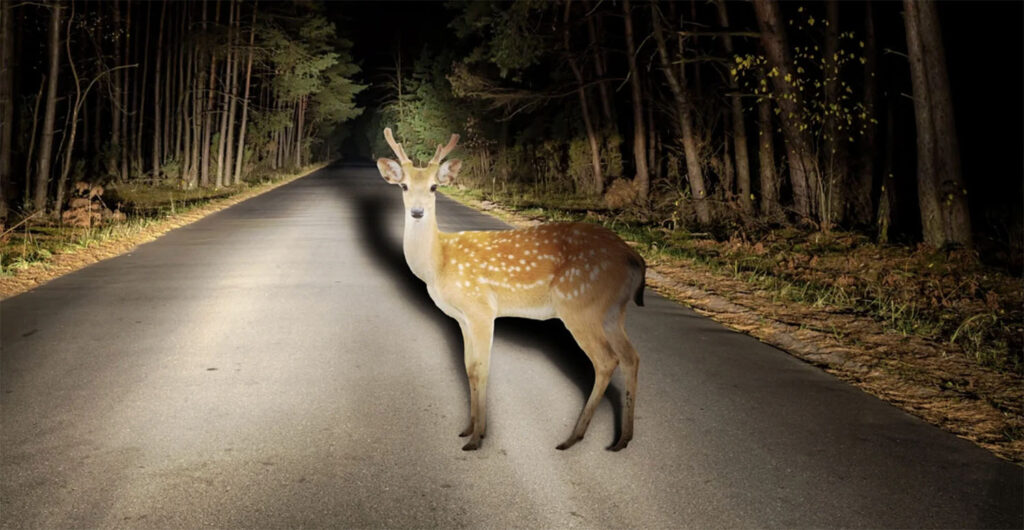
A deer will do it as a last-ditch survival trick when being chased by a tiger. Playing dead might fool their predator into being a bit casual in their final lunge, giving the deer an opportunity to suddenly jerk back to life and escape.
Abuse victims do it as a form of self-protection; anxiety sufferers do it in the face of too many decisions and existential overwhelm. And I reckon it’s what we do to survive when we find ourselves living a life that is so removed from the miraculous. Which is useful to reflect on; it certainly makes me more compassionate about things when I do.
There’s more wisdom in freezing that might be immediately apparent. The body chemically blunts pain perception, conserves energy, and possibly lowers the odds of further aggression, while allowing the brain a moment to process what’s happening.

All useful, all protective — and all, by design, meant to pass. Dr. Peter Levine’s famous story of watching an impala escape a cheetah, shake vigorously for several minutes, and then graze calmly is a perfect example.
Levine developed a complex and nuanced theory around why humans don’t shake off trauma as easily as that impala.
Finishing the Shake – Somatic Experiencing
It would be nice for someone carrying around a fair amount of trauma from adverse childhood experiences (ACEs) like me, to be able to shake like an impala and be free. For humans, social conditioning and lack of safety interrupt the discharge — we rarely let ourselves finish the shake.
Un-freezing ourselves takes time and patience. Peter Levine developed a useful framework for coming out of a trauma response like freezing called Somatic Experiencing (SE). SE provides a way for us to release trauma from our body intentionally and gradually.
SE therapy helps people release damaging, pent-up emotions in their body by using various mind-body techniques. The core concepts of SE include some which may not be familiar to many of us:
- body awareness, which helps people recognize tension spots in the body as well as conjure calming thoughts
- pendulation, which guides people from a relaxed state to emotions similar to their traumatic experiences and then back to a relaxed state
- titration, which guides people through a traumatic memory while noting any accompanying physical sensations and addressing them in real time
- resourcing, which helps people recall resources in their lives that promote feelings of calm and safety, such as special people and places.
Note: SE therapy usually requires a trained therapist, and may not be covered by insurance. This therapy may be useful for those of us with serious, life-impairing trauma.
But the concepts can be modified to address our ongoing everyday trauma too. I have been working on body awareness (Peter Gill’s idea of focusing in The Way of Curiosity). I’ve also been developing my own careful, DIY versions of pendulation and resourcing. Because I’m a novice, I don’t feel comfortable sharing instructions – a simple google search yields exercises. My practice has been instrumental in my healing.
Thomas Hübl’s Attunement – Somatic Experiencing in Community
Levine’s SE is meant to encourage individual healing by processing and completing a survival response. Thomas Hübl scales that same logic to work done in community.
Hübl speaks about the “relational field” in his book Attuned, which the idea that trauma isn’t only stored in individual bodies but transmitted and held collectively, across relationships, families (ancestral trauma), and cultures (collective trauma). His idea of “attunement” is essentially the same non-forcing, embodied, resourced attention that SE engenders, but practiced between people and within groups.
Which is where awe comes in. Research on awe shows it does something remarkably similar to attunement — shrinking the sense of self and expanding our felt connection to others, almost as if it’s the doorway into the very relational field Hübl describes.
Daily Moments of Awe

As we’ve said before, awe heals us mentally and physically. When we get good at inviting awe we’ll retrain our neural pathways to seek goodness, thereby changing our minds, bodies, communities and world. Practice is the key.
Preparing ourselves to notice awe is straightforward, according to Summer Allen of Psyche:
- If possible, limit distractions. Complete the task that has been nagging you. Turn off notifications on your phone (or leave it in another room or at home). Ask your partner, roommate and/or children for some space.
- Treat your awe experience like a contemplative exercise. Begin with some deep breathing, and pay attention to the sound and feeling of your breath as you inhale and exhale.
- Turn your attention outward and be open to inspiration. Notice what catches your mind. Do some of your senses seem heightened? Do you feel goosebumps? Do you feel more curious? Delighted?
- Don’t worry if you’re not feeling awe. Awe is different for everyone, and some days you might just not be feeling it.
Awe is easy to find once we begin to look for it. In a recent study, people were asked to take a weekly 15-minute “awe walk” for eight weeks, according to Time. The instructions were remarkably simple: Look at the world with fresh eyes, pay attention to the details around you, and engage your senses. People could walk in cities, suburbs, or the countryside. The point wasn’t the route but the mindset.
When Things Become Too Big, Focus on the Small
I’ve created a personal course of study which includes a slow re-read of Gill and Hübl, several books by Levine, a new exploratory somatic stretching practice, journaling, art and last, but never least, daily doses of awe and the gratitude that tends to follow close behind. Consider this an invitation to create your own version of this practice.
One of the wonderful things about this chosen course of study, apart from much less time doom-scrolling, is the resulting smaller sense of self – not diminished, but unburdened from having to hold the entire weight of Nepal and AI extinction risk and record heat on my two small sore shoulders.
Becoming more aware of the messages my own body is sharing with me, sometimes through uncomfortable emotions like fear, worry and overwhelm, grounds me in a physical way that information gathering and thinking never will. When I sense my chest is constricted I can open myself to that sensation with curiosity and gratitude, and simply listen. The anxiety doesn’t evaporate, but it is acknowledged and welcomed.
And this opening up also gives me space to heal with others, sharing both grief and connection, because a nervous system that isn’t clenched has room left over for others.