
By Teri Reitan, Alliance for Sustainability Business Director; Collaborative Edge Consulting, Founder & CEO
The breakthrough Vivomer™ plastics alternative, made by Shellworks, is a fermented-plant material that claims to behave like plastic in your hand and composts in your garden. Vivomer is a type of Polyhydroxyalkanoates (PHA), which are bio-based, versatile polymers produced by bacteria fermentation, serving as a marine-degradable, non-toxic alternative to conventional plastics.
This is both an exciting and compelling breakthrough as we desperately need alternatives to plastics as we confront their wrath – from microplastics and PFAS forever chemicals to the the Great Pacific Garbage Patch and wildlife and sealife ingestion. As we’ve pointed out, each of us has PFAS in us and more than a teaspoonful of microplastics in our brain and heart.
At the same time, it’s also where the hard questions begin. We’ve heard before and been hopeful for a plastics alternative that is truly sustainable and delivers on its promises.
High Performance Bio-Based “Plastic” from Waste Biomass that Is Compostable?
So when Shellworks says its material, Vivomer, is made from “waste biomass, for example from plants,” then “crafted through fermentation and formulation to behave like plastic, but without the harmful legacy,” my first instinct is to want to learn more.
The company is not merely saying Vivomer is “green.” It is making specific claims: the material is home-compostable, free of petrochemicals, free of BPA and PFAS, and stable during use.
Shellworks says Vivomer is certified “OK HOME compostable” by TÜV Austria, tested for industrial compostability under EN 13432, tested for marine biodegradability under ASTM D6691, and designed to biodegrade in landfill conditions under ASTM D5511. The company also says it will not create persistent microplastics. These are serious, concrete claims.
Compostability and Biodegradability Are Not the Same
And yet this is precisely where sustainability experts should get sharper, not softer. Because “biodegradable” has been misused before in packaging. A material can be biodegradable under one set of controlled conditions and uselessly persistent in another.
Compostability is not a vibe. It is a standard, a timeframe, a temperature range, an environment, and a disposal pathway. The academic literature on PHA-type biopolymers — the family of materials most relevant here — is quite clear: biodegradation and composting are not synonyms, and environmental claims only mean something when they are tied to specific standards and end-of-life conditions.
Could Vivomer Meet Our Ideals for Sustainable Packaging?
That said, Vivomer seems to have one quality that many “sustainable” materials do not: it appears to be built for the world as it actually exists. Shellworks says its products are “entirely stable in use and will only break down once disposed of.”
This is the ideal — a material that can hold up and survive various applications while being able to disappear once its uses are complete. It has to not only hold up on a lab bench or a woman’s vanity table, but survive the shelf, warehouse, shipping cycle and consumer. Plus, it then has to disappear once the consumer disposes of it. Shellworks puts it more elegantly: “Engineered to last. Designed to disappear.”
The science behind this ideal suggests that such an ambition is not ridiculous. The scientific literature on PHAs says these materials can be thermoplastic (ie: hard at cool temperatures but soft at high temperatures), processable using conventional plastics equipment, and useful where oxygen and water-vapor barriers matter. That matters for packaging.
But the literature is also full of caveats that should temper the marketing glow: some PHA materials are brittle, have poor flexibility and/or face odor issues in food applications. Many others remain expensive relative to petrochemical-based plastics. In other words, the promise of the PHA polymer family is real — but the viability of a specific commercial product depends entirely on formulation, processing and cost discipline.
Two Key Elements of Shellworks Bio-Based Vivomer
We want to highlight two distinguishing features of Shellworks’ Vivomer: easy replacement for plastic and focused product selection. Vivomer pellets look just like the pellets used for manufacturing conventional plastics and can be used on the same plastics production machinery. This will allow existing manufacturers to switch and make it highly scalable.
Second, instead of trying to replace all plastic everywhere — the favorite delusion of startup pitch decks — it is targeting packaging formats that are already broken in the current system.
For example, one of Shellworks target markets is beauty industry droppers and pipettes. They are tiny and made of mixed materials, usually difficult to recycle. Packaging Europe reports that Shellworks developed what it calls the world’s first fully home-compostable cosmetics pipette dropper. Conventional droppers are typically made of fused materials like glass, rubber and plastic that are hard to recover through recycling infrastructure.
Shellworks’ pitch is not that Vivomer is morally pure, but that some packaging is so systemically unrecyclable that a compostable mono-origin alternative might actually be more honest.
This is a strong argument for Vivomer’s viability – that it might be very good at replacing the packaging formats where conventional recycling is already more press-release than reality. Shellworks is not trying to replace all plastics upfront, but instead taking it a step at a time. Droppers. Refill pods. Niche beauty components. Hard-to-sort formats. Premium packaging where aesthetics matter and mixed materials currently reign.
A Beauty Product Packaging Breakthrough Used by Pamela Anderson’s Sonsie
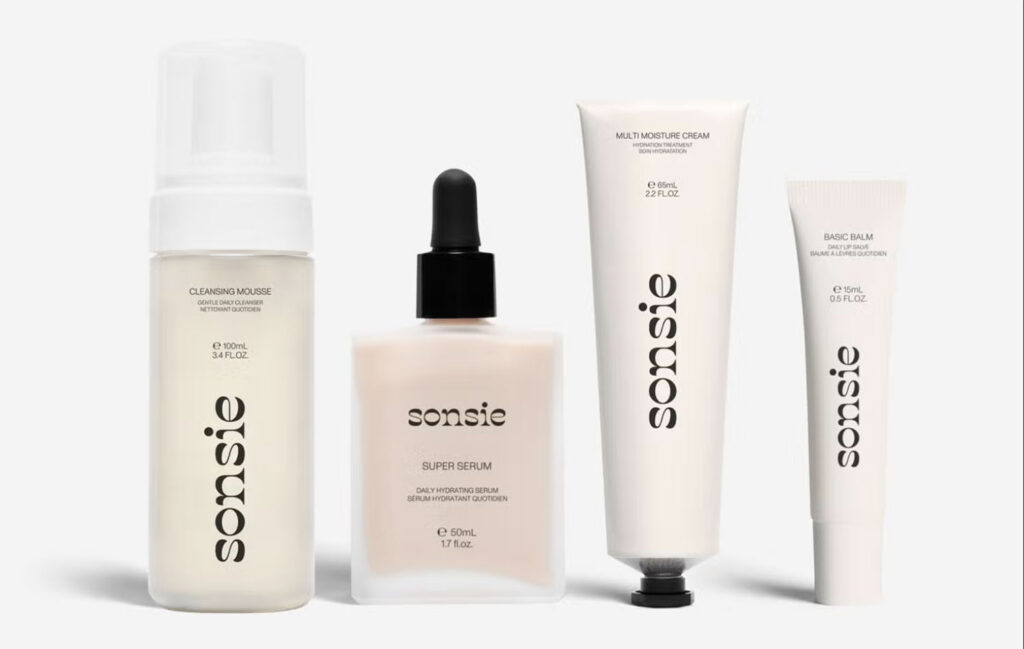
Beauty products packaging is exactly where Shellworks is gaining traction. Packaging Europe reports that the company raised $15 million in Series A funding to expand Vivomer globally and move into the US and EU wellness markets.
Separate trade coverage says Shellworks claims to have replaced more than 99 tons of conventional plastic so far and can produce millions of units annually in some formats. The company has been building a regional production network. The key to their viability lies in the ability to deliver on their claims.
Shellworks partnerships include Pamela Anderson’s beauty brand Sonsie Skin, Wild personal care brand, and Phil’s Finest brand in the US, and several other companies in Europe. Sonsie Skin provides a useful real-world case study, given it balances the promise with the risk of adopting a material like this
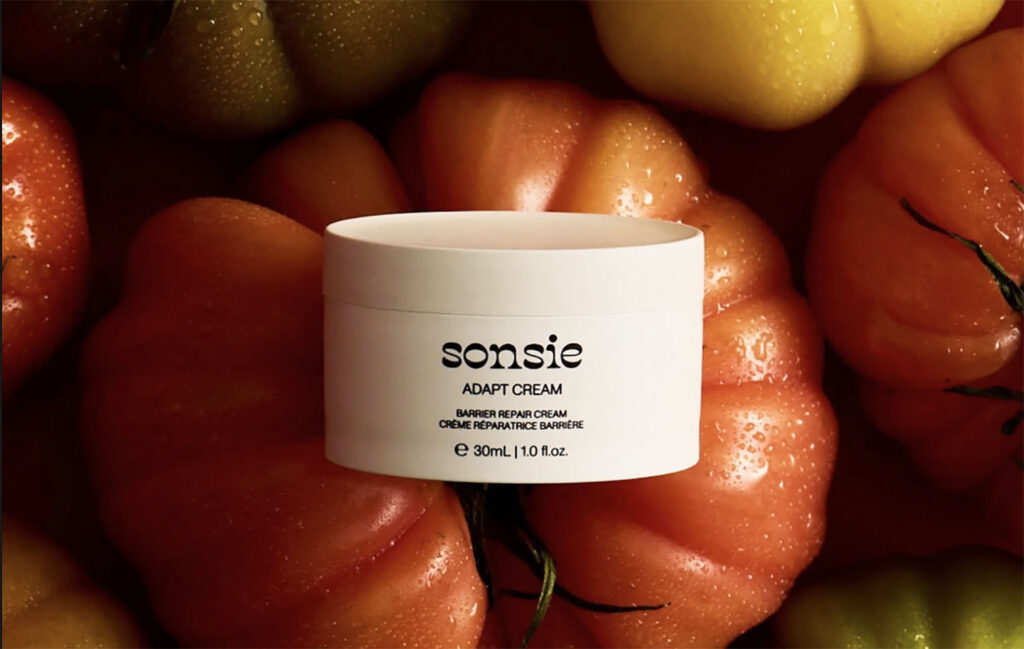
On its product page for Adapt Cream, Sonsie says: “In partnership with Shellworks, we’ve packaged this in Vivomer, a home-compostable material made by plants.” Pamela Anderson’s note on the same page is even more consumer-friendly: “It’s not plastic, it’s made from plants. It’s home compostable! I can actually just throw it in my garden compost when I’m done.”
Bio-Based Meets Financial Realities
However, cost is the trade-off, at least in Vivomer’s infancy. This is where the green benefit gets expensive. Beauty Independent reports that Sonsie CEO Kailey Bradt estimates the Vivomer jar costs four to six times as much as a comparable recycled-plastic container. This is a big price difference, but the cost differential will certainly drop as it moves to scale.
Sonsie reportedly raised the price of Adapt Cream by $4 to help account for that packaging choice. Per trade sources, Shellworks reports pricing is now competitive with glass and aluminum as it begins to scale.
This tells you almost everything you need to know about where Vivomer stands today – it is not ready to be a mass-market replacement for plastics. Shellworks is trying to win in the corners first in a market where certain consumers are willing to pay higher prices for a good cause.
The Need for Collaboration, Lifecycle Assessment and Municipal Composting
“It’s collaboration, not competition, that’s going to drive this industry forward when it comes to sustainability. Sonsie is setting a new standard for beauty brands with this move, and I hope to see other brands join us in embracing innovation” say Sonsie’s forward-thinking CEO, Kailey Bradt.
What may help Shellworks to increase their sales is to obtain a third-party life-cycle assessment on the company’s own site that would let procurement teams rigorously compare Vivomer with refill, reuse, aluminum, glass, paper, or high-PCR plastic across specific use cases.
And there is the need for an effective municipal composting structure in order to avoid inconvenience for consumers who do not have a compost bin. Furthermore, local systems need to be able to handle the material and deal with contamination. Premium brands alone cannot afford adoption by themselves, or this elegant end-of-life story starts to fray.
Even Sonsie Skin acknowledges this operational reality: its instructions tell consumers to rinse the packaging, let it dry, and place it in a home compost bin. If consumers do not have one, they’re instructed to visit the Sonsie sustainability page for other disposal options. If it’s too difficult and the consumer throws it in the trash, it defeats the entire purpose.
The Future for Vivomer as a Viable Alternative
Vivomer looks to be a credible and scalable alternative to plastic in this crowded, overclaimed category. It has named customers, a visible product portfolio, specific certification claims, and a smart commercial niche.
Vivomer has proven it can make a beautiful jar or a compostable dropper. The next test is whether Shellworks can prove — independently, repeatedly, and at scale — that its material delivers on their promises. And that it isn’t too inconvenient to dispose of properly in order for it to decompose.
Too soon to be cautiously optimistic? I am already there and plan to monitor Vivomer’s US and EU results closely in the coming months. I’m also going to see if it’s worth investing.