
By Alliance President Terry Gips and Communications Coordinator Amy Durr
Minnesota has been carrying an extraordinary weight from gun violence that begs for a return to civility in public discourse and a respect for everyone’s fundamental rights to safety and security.
Minneapolis was one of the epicenters of ICE occupation this year, marked by the horrific and well-publicized killings of Renee Good and Alex Pretti, deaths that shook the city, country and world.
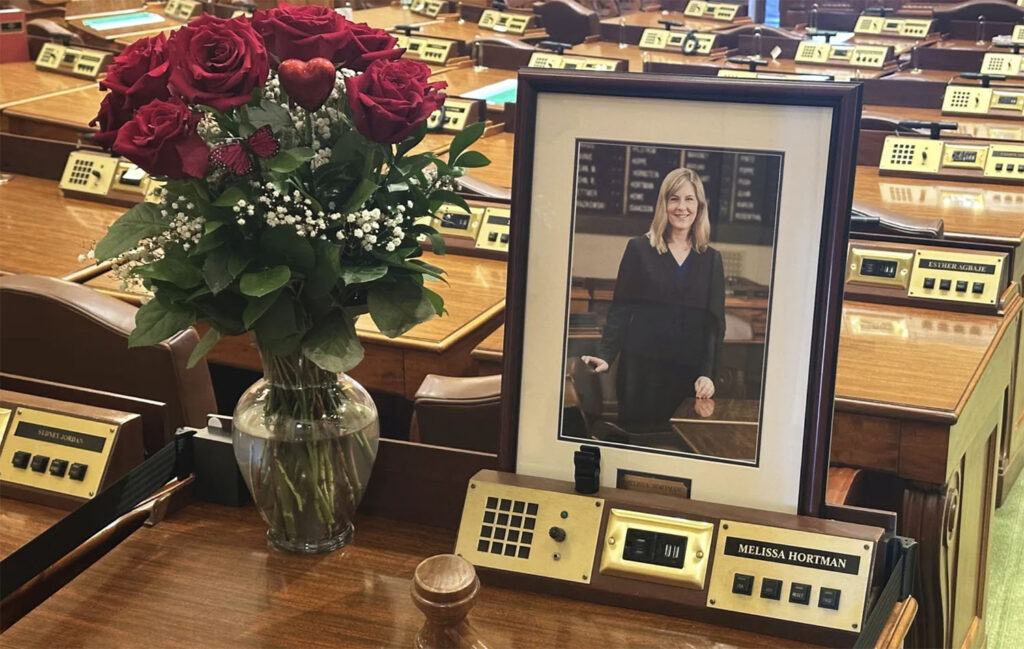
Before that came the political assassination of beloved Minnesota House Speaker Emerita Melissa Hortman and her husband Mark in their home, and the same day shootings of Senator John Hoffman, his wife Yvette, and their daughter Hope in their home. This was violence aimed directly at the people Minnesotans chose to lead them and who supported reproductive rights, which the assassin opposed.
These losses arrive on top of a long, documented history of racial disparity and misconduct within the Minneapolis Police Department. That history culminated, for the world, in the murder of George Floyd on May 25, 2020.
That is a great deal of grief for one city to hold. Minneapolis–St. Paul — the City of Lakes, home to 3.8 million people, a place known for its arts, its nature, its civic seriousness — has been asked to absorb trauma that would break a lesser community. That it hasn’t broken is remarkable.
Tragedies that Call for Fundamental Shifts
While each of these murders triggered massive public responses, the murder of the Hortmans and shootings of the Hoffmans brought about a widespread, bipartisan push by state legislators to lower the heated political rhetoric and bring back civility to elected politics.
Fortunately, things have gotten so bad and out of control that the public and politicians on both sides of the aisle seem to agree we can’t continue the violent verbal personal attacks and need to turn down the temperature overall.
Unfortunately, we have a President and White House who don’t seem to agree and continue with their horrific assaults on anyone who doesn’t agree with them, whether Democrat or Republican, even judges and the media.
So is there a path to overcoming these uncivil wars?
What We Can Do Week June 8 – 14, 2026
In the wake of the murders of the Hortmans and assaults on the Hoffmans, many Minnesotans from all different political perspectives have come together to create the non-partisan What We Can Do Week. It is meant to both honor their sacrifice and to help assure that it never happens again. It will hopefully become an annual week-long event culminating on the day of the murders, June 14.
The What We Can Do Week website describes it as “an opportunity to broaden our circles, encourage dialogue, and build relationships to ultimately support peaceful political engagement and the rejection of political violence.”
“The best way to honor our parents’ memory is to do something, whether big or small, to make our community just a little better for someone else.” — Sophie and Colin Hortman, the children of Melissa and Mark Hortman
What We Can Do Week 2026 is bringing together voices from media, business, mediation, public service and civic leadership to tackle some of the biggest questions facing our communities right now:
- How do we lower the political temperature?
- How do we navigate disagreement with respect?
- And how do we rebuild trust across divides?
From conversations on civility in media and business to conflict resolution and community leadership, this year’s event series included Taking a Stand for Civility: Leadership from the Business Community, Mediation Skills for Non-Mediators – How to Keep the Peace and Polarization and Political Violence.
See the events page for opportunities to join in, and sign up for the newsletter to get information sent to you directly.
For the anniversary itself there are no formal events, but local leaders and family members have suggested honoring the Hortman’s legacy in a personal way by planting a tree, visiting a local park or bike trail, or spending time with a dog.
“Courage is not just standing by yourself. Courage is whether you’re willing to stand next to someone you don’t always agree with, for the betterment of this country. That’s what we need to see more of.” — MN US Senator Amy Klobuchar
We totally agree and urge all of us to be kinder with each other and to actually be curious to learn more from someone we disagree with as a way to return to a more civil society.