
By Alliance Communications Coordinator Amy Durr
If I told you that for many years I kept every scrap of paper (including toilet rolls) on my vacations and lugged them home to recycle you might call me overly zealous (if you were feeling kind).
Perhaps I am. But paper is one of the most recycled and recyclable substances we have. Plus I adore trees. A lot. It hurts me that 4 billion trees are cut down each year to make paper, accounting for roughly 35% of global deforestation.
I now know that some types of paper should not go into my recycling, such as the very thin bags you get at the pharmacy. Some paper products are too degraded for recycling because their cellulose fibers have become so short from multiple reuse cycles.
Some of those things I dragged home should have been composted (if I had organics waste collection) or thrown away still with some guilt. There’s a lot I didn’t know then, and there still is. To be honest, what’s recyclable and how best to recycle still feels like a moving target most days.
Recycling Should Be Easy, Right? It’s Not
Recycling should be one of the easiest things we do daily, but it remains confounding for most of us. Approximately 75% of US residents have curbside recycling collection, and 94% of the population has access to a recycling program. Yet, only 43% of US households actively participate in recycling programs. What’s that about America?
Recycling is one of the few things most Americans can agree upon – 95% are supportive. The recycling rate has increased from less than 7% in 1960 to the current rate of 32%, according to the Environmental Protection Agency (EPA). The EPA’s National Recycling Goal is to increase the recycling rate to 50% by 2030.
I find that goal grim. Fifty percent? In 2026?
Other Countries Have Recycling Rates Nearly Double Ours, But Is That Enough?
Color me surprised to learn that the top countries in the world are only hitting 60%+:
- Germany is often ranked first in Europe and globally for municipal waste recycling, yet its rates are still only 52% – 66%
- Austria is frequently ranked near the top with high material recovery and composting rates yet they’re at 59% – 63%
- South Korea is a global and Asian leader in municipal solid waste recycling, but its recovery and recycling rates are just 50% – 56%
It’s clear we all have work to do. In celebration of America Recycles Day we’re here not to wag our finger but to answer the questions we get most often about recycling in the US. I’ll share some things that may surprise you and hopefully make recycling easier. At the end, you’ll see why recycling makes sense despite all of the critiques and challenges.
Recycling is GOOD
We’re here to assure you that yes, recycling is still worth it. We should continue to spend time, resources and tax dollars increasing access to recycling, improving techniques and finding ways to recycle more items. As Change Is Simple reminds us:
It Benefits the Economy – Recycling and reuse activities in the US supported about 757,000 jobs, $36.6 billion in wages and $6.7 billion in tax revenue in a single year (2012), according to the EPA. That works out to about 1.57 jobs, $76,000 in wages and $14,101 in tax revenue for every 1,000 tons of recycled material.
It Benefits the Environment – Recycling helps conserve natural resources, such as timber, water and minerals, while reducing energy use and greenhouse gas emissions. For example, in 2018 nationwide recycling of municipal waste helped save more than 193 million metric tons of carbon dioxide, the equivalent of removing 42 million gas-powered cars for a year. Recycling also diverts trash from landfills and incinerators, protecting ecosystems and cutting down on pollution.
It Benefits Future Generations – Recycling helps preserve the planet’s resources and natural habitats so that future generations can enjoy clean air, water and healthy ecosystems. By reducing waste, conserving energy and lowering greenhouse gas emissions today, we leave a healthier, more sustainable world for our children and grandchildren.
But Recycling is Challenging
While recycling may seem to be straightforward (melt down the metal, glass or plastic and form it into something new), it’s a complex, nuanced and downstream solution which needs to be incorporated into the planning of every manufactured item. The main challenges from a systems perspective in 2026 are:
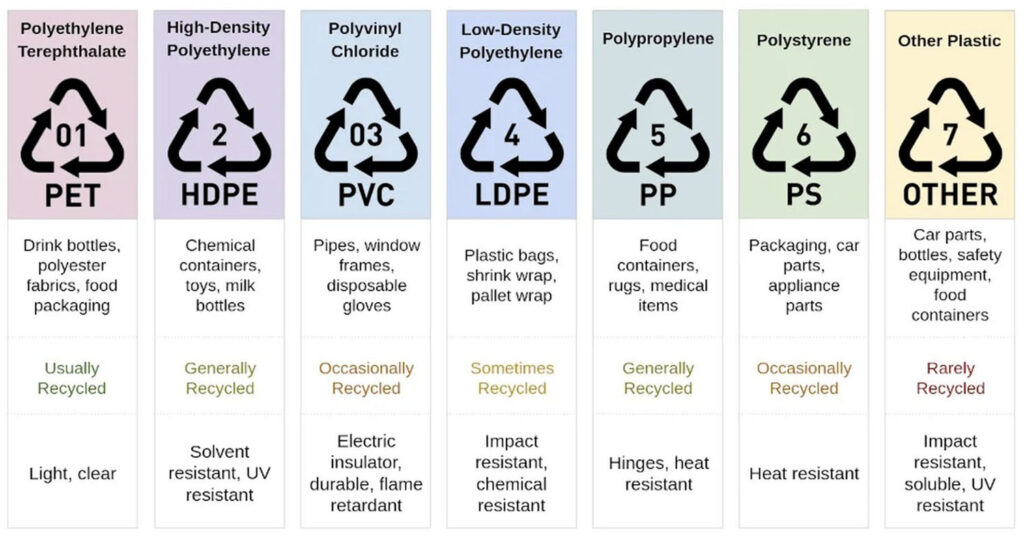
- Most plastic isn’t actually recyclable in practice – Only bottles and jugs (#1 and #2) have reliable markets, though #5 are recyclable in many locations. Films, pouches, clamshells and mixed materials too often end up having to be landfilled or burned.
- Contamination and “wishcycling” – Hopeful tossing of greasy containers, bags, hoses and batteries jams sorting equipment, lowers bale quality and can cause fires. It’s made it worse by confusing labels, including the chasing-arrows symbol on things that can’t be recycled.
- Weak, volatile markets – Recycling only works if someone buys the material. Virgin plastic made from cheap oil and gas often undercuts recycled plastic. China’s 2018 import ban also removed the main outlet the US had relied on.
- Taxpayers foot the bill, not producers – Municipalities (i.e., taxpayers) have to pay millions of dollars to manage packaging they didn’t design, when instead the manufacturers should have to foot the bill, as in extended producer responsibility legislation. Until that happens, companies have little incentive to make packaging recyclable or use less of it.
- Uneven access and poor data – Rural areas and apartment dwellers often have no convenient recycling. There’s also no consistent national data on what’s collected or where it goes, so it’s hard to know what’s working.
- Recycling should be a last resort – Recycling is listed last in “reduce, reuse, repurpose, compost, recycle” hierarchy for a reason. Focusing on recycling can distract from making less waste in the first place. Too often, people think they’re virtuous because they recycle, but don’t consider consuming less or reusing.
Your Top Five Recycling Questions Answered
Questions linger: What is recyclable? How many of the items collected as recycling are actually recycled? Why is recycling still so weirdly confusing in 2026?
1. What is recyclable? What can I put in my curbside bin? What should never go into my curbside bin?

Recycle These Items in Your Curbside Collection
Plastic Bottles, Cups & Containers Recycle plastics by shape: bottles, jars, jugs, cups and tubs. The “chasing arrows” symbol doesn’t necessarily mean it’s recyclable. See our guide to the numbered chasing arrows symbols below.
Food & Beverage Cans Recycle empty tin, aluminum and steel cans.
Paper & Paper Cups Paper, newspaper and magazines are good to recycle. Compost or trash soggy paper products. Paper cups are increasingly accepted for recycling, and must be empty and recycled without lids, but keep cup sleeves on.
Flattened Cardboard & Paperboard Flatten and recycle all cardboard and paperboard, but not frozen food boxes.
Food & Beverage Containers Make sure containers are completely empty to avoid contamination, and put any screw tops back on. Rules for recycling milk cartons, juice boxes and food cartons vary by city, county and state. Check local recycling programs for options to recycle cartons.
Glass Bottles & Containers Most standard curbside and municipal recycling programs accept food and beverage glass bottles and jars, though acceptance depends heavily on your local waste management rules.
Broken glass is usually not recyclable.
Do Not Recycle These Items in your Curbside Collection
Plastic Film (Shopping) Bags Plastic bags are not accepted as part of curbside recycling programs – they get tangled in equipment and cause complete shutdowns. Do not bag any curbside collection recyclables as materials inside may not get recycled.
Plastic Wrap & Film Plastic wrap, bubble wrap, sandwich bags and freezer bags should not go in the recycle bin.
Flexible Packaging
Flexible packaging like chip bags and juice or soup pouches usually cannot be recycled in curbside programs. This type of packaging is made from multiple materials preventing it from being recycled. Companies like TerraCycle and Ridwell offer services to recycle these items.
Polystyrene Foam Polystyrene foam containers and cups are not acceptable in nearly all curbside recycling programs, though some municipalities have begun accepting them at drop-off sites. Packing peanuts aren’t recyclable either, however some shipping stores will take peanuts back for reuse.
Coated Cardboard Frozen food boxes are usually coated so may be composted, but not recycled.
Specific Items We All Wonder About
Plastic film (shopping) bags Plastic film bags are recyclable, but not through your curbside recycling program. You can reuse plastic bags, or learn where to recycle them at plasticfilmrecycling.org. Many grocery and big box stores collect plastic film bags for recycling.
Pizza Boxes Clean cardboard pizza delivery boxes without leftovers or liners should be recycled, unless they are saturated with oil or cheese. The top of the pizza box is usually clean enough to recycle. Some communities allow them in compost, so check your local guidelines.
Aluminum foil Aluminum foil is similar to the plastic bag conundrum. Technically, because it is aluminum, it is recyclable – but not all recycling facilities will accept it. Check this Recycling Locator to see the requirements in your area, suggests Rubicon.
Two common reasons why facilities won’t accept foil are that it’s either too soiled with food or too thin/soft for their equipment to safely process it. If you can’t recycle foil in your area, consider switching to reusable containers or food covers, or wipe down and reuse your foil instead of tossing it.
Glass Glass is infinitely recyclable, but it may not be accepted in your curbside recycling. In recent years, recycling facilities have been turning away glass due to its breakability, both in transit and in processing. Broken glass can be costly to collect and sort safely, so check with your local recycling requirements before placing it in your curbside bin. Many retailers and local deposit sites still collect glass, even if your curbside pickup does not.
Find Out What Is Recyclable in Your Community
Check Local Guidelines: Recycling rules vary by location. The EPA recommends contacting your local county or municipality to determine your local recycling options. Additionally, please check out the Earth911 website for more information.
Understand Resin Codes: Familiarize yourself with the resin identification codes, usually found inside the recycling symbol, to know which plastics are commonly accepted in your area. See #2 below.
2. Does the chasing arrows symbol mean something can be recycled?
No, not necessarily. As you can see below, there are 7 categories of plastics, several of which are difficult if not impossible to recycle and should not be placed in your curbside bin.
3. What percentage of the items collected as recycling are actually recycled?
Sadly, nobody tracks the true bin-to-new-product number in the US. So it’s very difficult to answer exactly how much of our recycling is truly recycled. Some of the figures below are recycling rates for all of that material thrown away, not for what goes in the bin. Plastic – 8% Only a small fraction of the plastic Americans put in recycling bins actually gets recycled, Seaside Sustainability tells us. According to the EPA, in 2018 just 8.7% of plastics in the United States were actually recycled. Another 15.8% was incinerated with energy recovery, while a staggering 75.6% ended up in landfills. Beyond Plastics’ report “The Real Truth About the U.S. Plastics Recycling Rate” documents a recycling rate of just 5-6% for post-consumer plastic waste in the US for 2021. The report also reveals that while plastics recycling is on the decline, the per capita generation of plastic waste has increased by 263% since 1980. While the overall plastic recycling rate is shockingly low, the rate for common plastic bottles (RIC #1 and #2) is 29%. Glass – 40% Nationwide in 2018, the actual recycling rate for glass was 40% in single-stream curbside bins. It could be higher but there is breakage and contamination with paper and plastic shards, according to the Glass Packaging Institute. Multi-stream or drop-off collection rates are much higher, up to 90%. The California rate is 90%, in large part due to container deposit programs. In Europe the average glass recycling rate is 75%, with top countries like Sweden and Belgium reaching around 95%. Aluminum – 50% The consumer recycling rate for aluminum beverage cans is 50%, according to the EPA. About 75% of all aluminum ever produced in human history is still in use today because the metal can be recycled indefinitely. The global recycling efficiency rate is roughly 76%. In heavy industrial sectors—such as building, construction, and automotive manufacturing—recycling rates exceed 90% (and reach about 97% for end-of-life vehicles). Paper – 64% The overall paper recycling rate is 64%, according to the American Forest & Paper Association. The recycling rate for cardboard, which the industry calls corrugated, was estimated at 69% – 74%, according to Two Sides North America.4. Should I rinse my recyclables? Should I throw plastic screw-on caps away?
Rinse and dry: Although there is some disagreement, most recycling groups still recommend that you empty all liquids and food residue out of containers to lessen contamination. Replace caps: Put screw-on plastic caps back onto bottles and tubs before tossing them in the bin.5. Does recycling do more harm than good?
Recycling is hands down, without a doubt, better for the environment than sending waste to landfill, according to Rubicon (and everyone else). Aside from best practice of not burying our trash in the ground, a recent study looked at the amount of energy it takes to manufacture products from recyclables versus virgin materials, including the energy used for collecting, hauling and processing the recyclables. Turns out, virgin material manufacturing requires nearly double the energy (23.3 million Btu) than recycled material manufacturing (10.4 million Btu), even when you include the 0.9 million Btu for collecting, hauling and processing the recyclables. Experts have done the math. Recycling is worth it. Let’s Celebrate America Recycles Day Together Recycling is not perfect, but it’s an essential part of reducing waste and protecting the environment. Change Is Simple suggests a few simple ways to celebrate:- Learn what is recyclable in your community and share that information with friends and neighbors.
- Buy products made from recycled content to create demand for sustainable goods.
- Advocate for honest definitions of recycling, a national bottle bill, extended producer responsibility legislation and truth in labeling legislation on the national state and local levels.
- Teach kids about the benefits of recycling.
- Spread the word on social media to encourage others to take part in recycling efforts.
- whole system solutions like Japanese beer bottles and deposit programs
- product take-backs and extended product stewardship
- the new cohort of companies offering to recycle more difficult items like fabric and foil bags