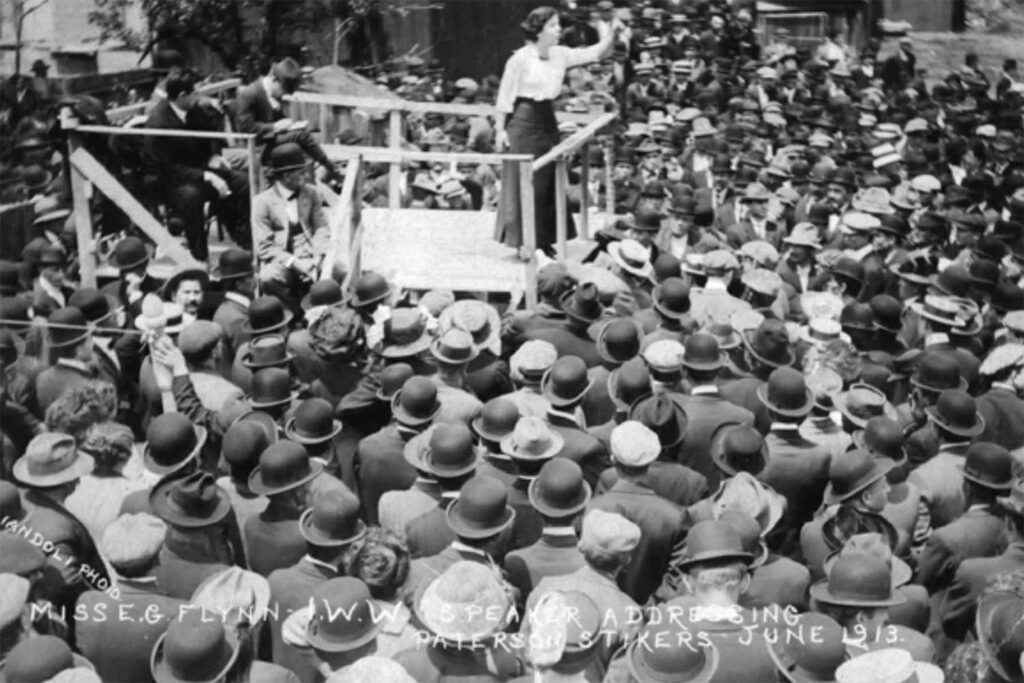
Elizabeth Flynn, a feminist, labor party leader, and one of the founders of the ACLU, speaks to a group of silk workers on strike and their peers in 1913. The Massachusetts strike for shorter work weeks and better pay lasted more than two months. Credit: University of Michigan
By Alliance Intern Eleanor Hulan
“The fundamental urge behind labor organizing, the idea that workers have a right to be equitably paid for the work they do, to be treated with dignity, and to believe their efforts might better their own prospects and the lives of those dear to them, has always been legitimate and just.” — Philip Dray, 2011
Laborers in the classic sense, the ones that fill the pages of There is Power in a Union: The Epic Story of Labor in America by Philip Dray, are often invoked by both American political parties. Praised for things like hard work, embodying upward mobility, and being the rhetorical heart and soul of America, their welfare is often just political noise, given this country has no labor party and progress on workers rights have largely stagnated.
I purchased There is Power in a Union from the Tenement Museum in New York, which also happens to be a recommendation I’d like to share, if you ever find yourself in NYC. The museum bookstore was one of the best I’ve seen, and also reminded me of the need to read American histories more, especially those from and about traditionally underrepresented people and groups.
First a warning: this is a long book. It will not be a one session read for most people. It is extremely captivating writing, well-researched but more accessible than strictly academic. Every chapter has personal stories of specific people, then situates these stories within movements, labor eras and politics.
It opens with a chronicling of labor movements in the textile industries in the early and mid 19th century in Massachusetts, which were almost exclusively led by women. These manufacturing jobs were entangled with women’s education and liberation; many of the workers wrote and edited for local labor journals, and were able to find more opportunities for education than in the agricultural areas they moved from.
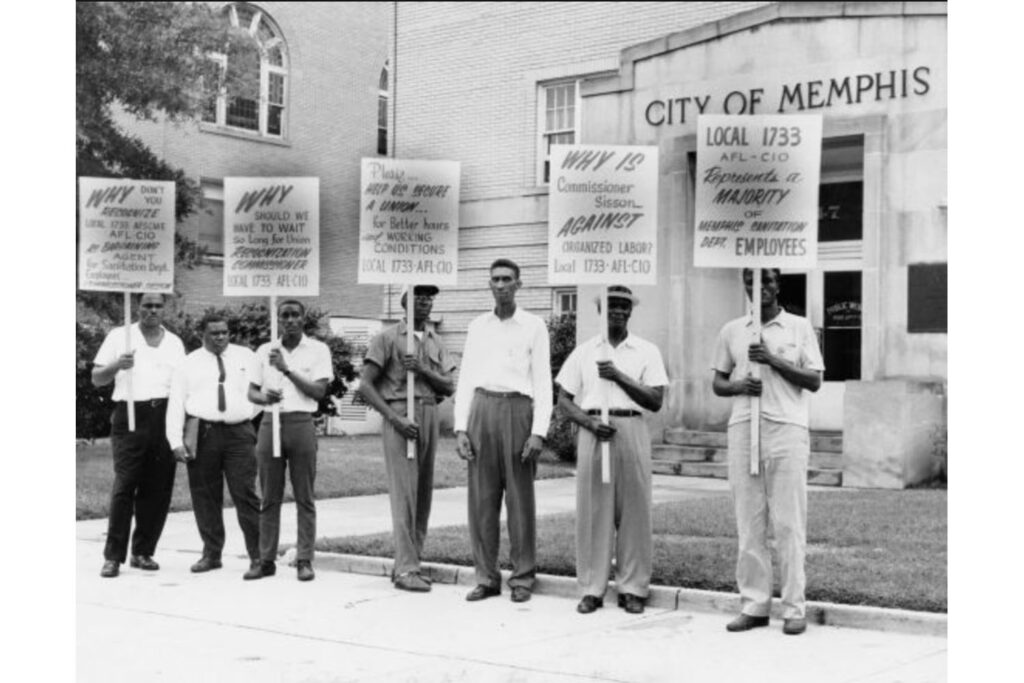
MLK Jr visits Memphis in 1968 to lend support to underpaid sanitation workers advocating for unions and better treatment. Credit: Wayne State University
Many of the issues, as Dray moves from the textile plants to iron forges to mines to railroads to the auto industry, are intersectional. He writes of these labor eras in conjunction with political movements like abolitionism, suffrage and civil rights, both because they cannot be untangled and also because labor leaders were often outspoken in these areas. Frederick Douglass, for example, headed the Colored National Labor Union in the late 19th century.
The first 60 years or so he chronicles were striking for their optimism. Workers did not yet have many protections but in spite and because of this, their aims were less limited than now. They envisioned, in articles and in collectivist groups and in rallies, a world without exploitation.
We have not achieved this. For example, North Carolina outright bans collective bargaining agreements with employers, a practice that was deemed in violation of international labor standards by the UN.
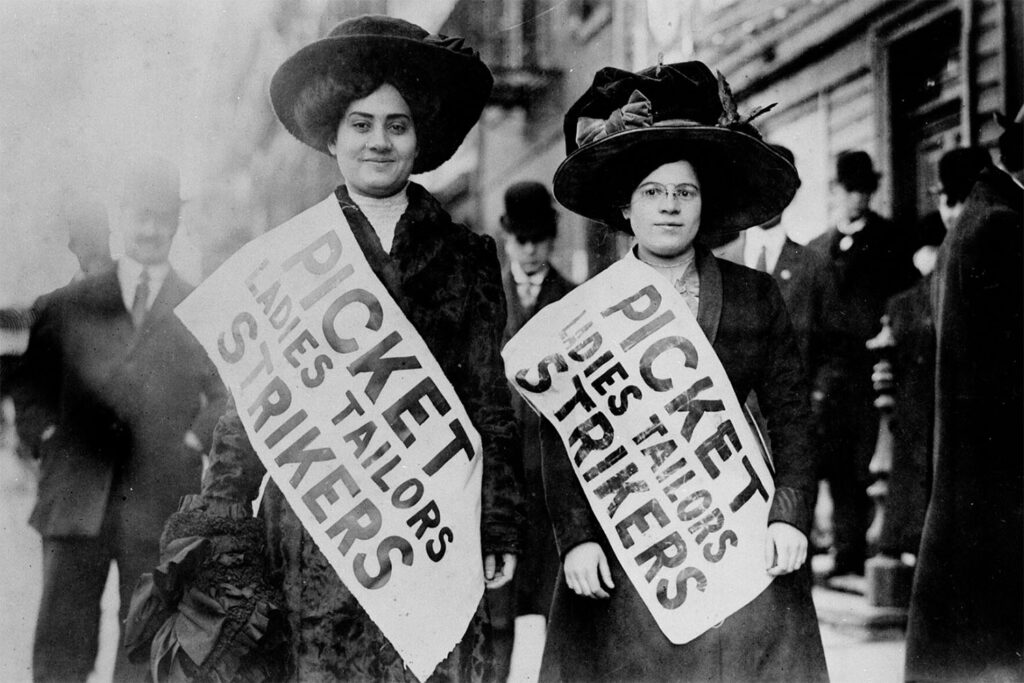
Seamstresses in the International Ladies’ Garment Workers Union picket in 1910. Credit: Library of Congress
Towards the end of the book, Dray writes:
“It is doubtful most people would describe themselves as optimistic about the present state of organized labor. The labor movement described in this book, a cause that ‘uniquely embodied a vision, a generosity of spirit and the political courage to rescue society from selfishness, exploitation, and organized violence’, now belongs to history.”
This is true. But reading about the courageous, intelligent and passionate organizers who made the labor movement what it is both revived my admiration of Americans of the past and gave me some hope for a new kind of union. Trade unionism was legalized in the US mostly because of judiciary recognition of the political power ordinary workers, when organized, were beginning to wield. It may take new forms, but we can still wield that power.