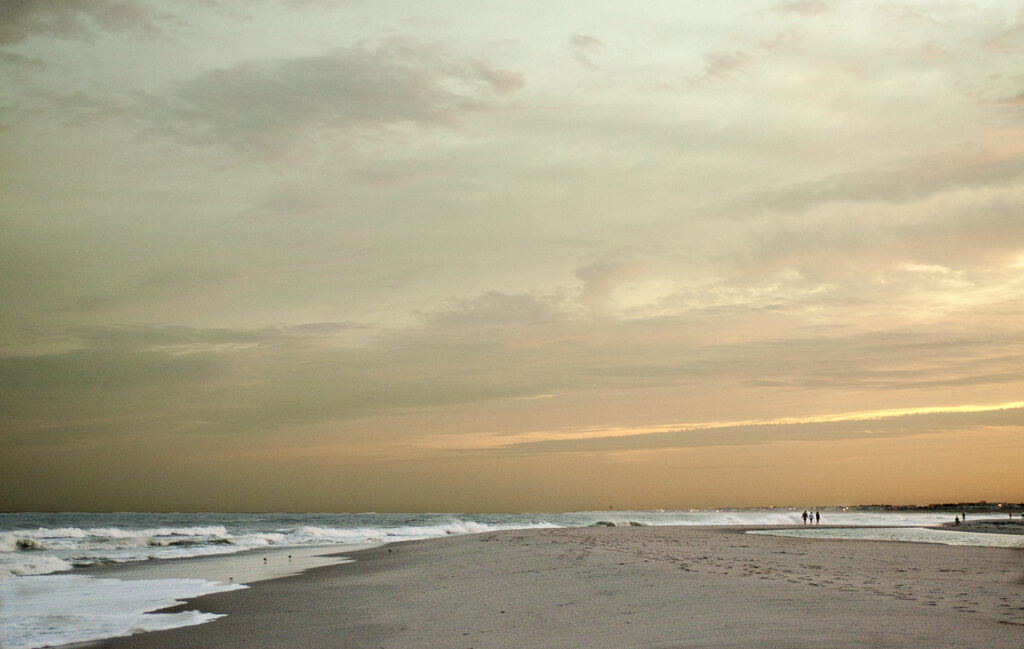
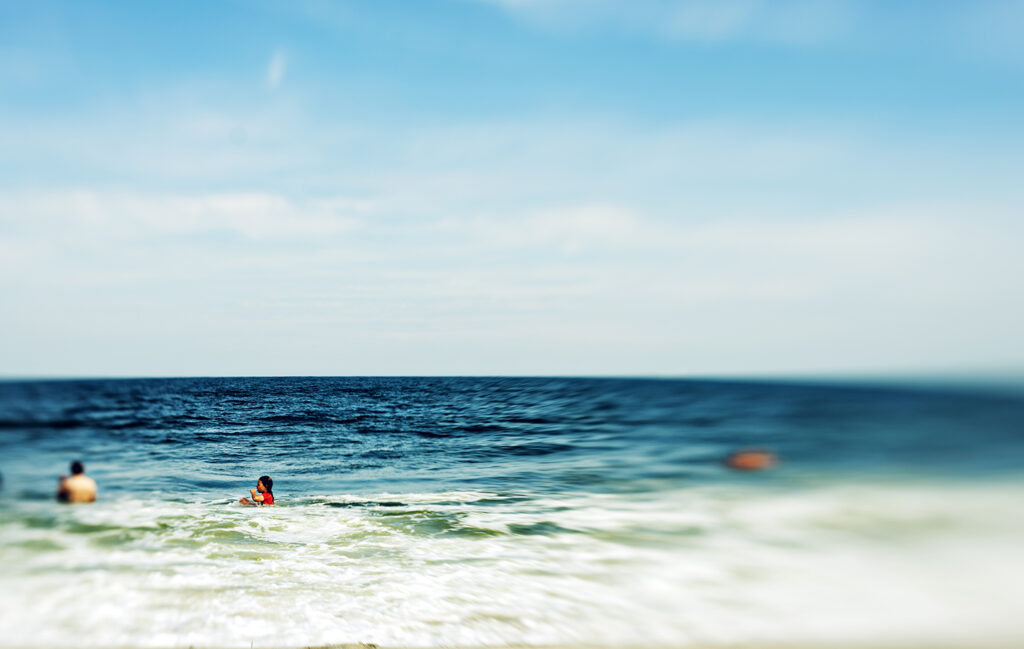
The Atlantic Ocean as seen from a NJ beach after a big storm. Credit: Amy Durr
By Alliance Communications Coordinator Amy Durr
One of my home places is the ocean, the Atlantic Ocean off the coast of New Jersey to be exact. I have loved it with a terrible, extraordinary love. My baptism was in its salty water – any holiness I have came from brine and seaweed. In my smallness its depths felt dangerous and magical.
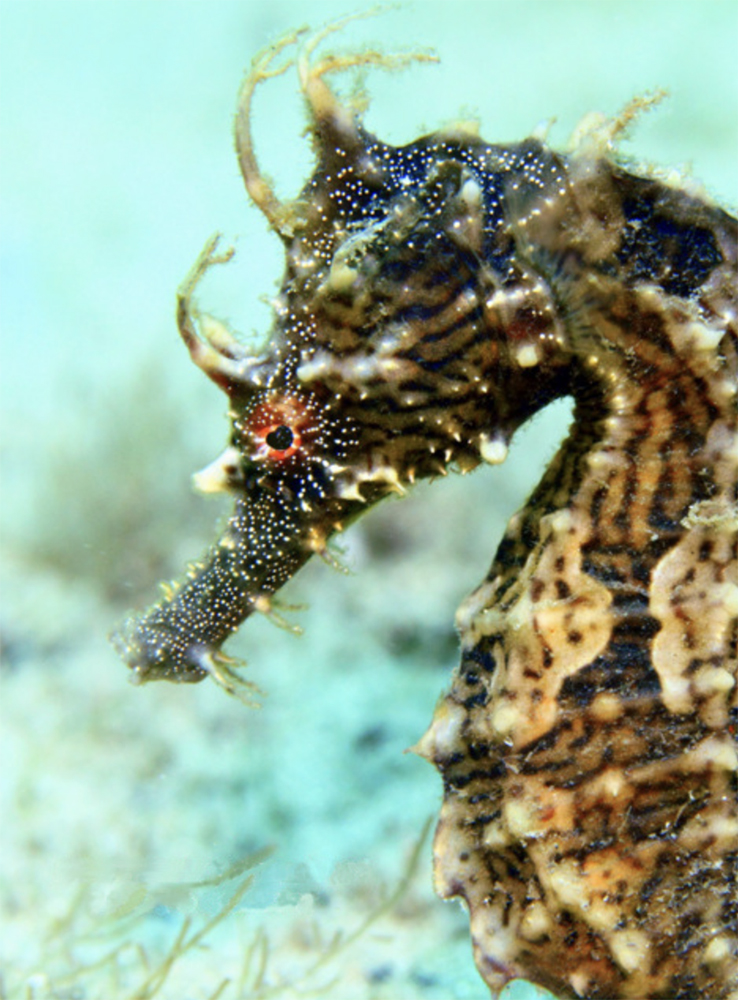
Sandcrabs and seahorses gave me a sense of awe and place as a child. I could scoop sand, let the waves make a smooth pool, and watch my companions swimming within seconds.
But one summer as I played with my children by the edge, we couldn’t find any sandcrabs. My heart sank, followed by a moment of panic. Where were my childhood companions? I had always believed my ocean and shoreline were invincible. They weren’t.
How does one deal with such a loss? And how do we as humans feel when what is most sacred is no longer present? Could this be the common ground we have so long needed to overcoming our uncivil wars?
When the Place You Love Begins to Change
In 2007, Australian philosopher Glenn Albrecht coined a new word, solastalgia, meaning the profound distress or homesickness caused by negative environmental transformation while still inhabiting one’s home.
It’s the sadness you feel for something near and dear that’s no longer – a favorite animal, river, land, community or people. It can be a place that’s been changed from how you remember it, a homesickness even when you’re home.
Something registers before you have words for it. A morning that smells different. A walk that returns you home unsettled. An absence of a sound you don’t realize is missing.
While filled with poignancy, the deep feelings of solastalgia are felt by every human. They’re not only a common bond, but offer an opportunity for us to come together – whether Republican, Democrat, Independent or Fed-up. They can be a path to touching our shared, too-often hidden but profound desire for legacy, a gift to our children and theirs.
What if this Earth Day we begin a mutual conversation across every divide about these tender places inside each of us? Can we take some small steps towards grieving together, and healing ourselves and all the places and beings we care so deeply about?
Grief for Place Has No Political Party
My son loving the ocean as much as I did at his age. Credit: Amy Durr
It doesn’t matter who you are, what your place is – the farmer, the hunter, the coastal family, the rural community whose river changed. Recent polling by The Nature Conservancy reveals that a vast majority of Americans have a deep, bipartisan connection to the land, with 94% supporting natural climate solutions and 93% favoring the protection of natural beauty.
This is great news – we care. It’s a common bond that becomes a common language and a beginning for us to overcome the divides.
A Little Help from Indigenous Wisdom: Relatives, Not Resources
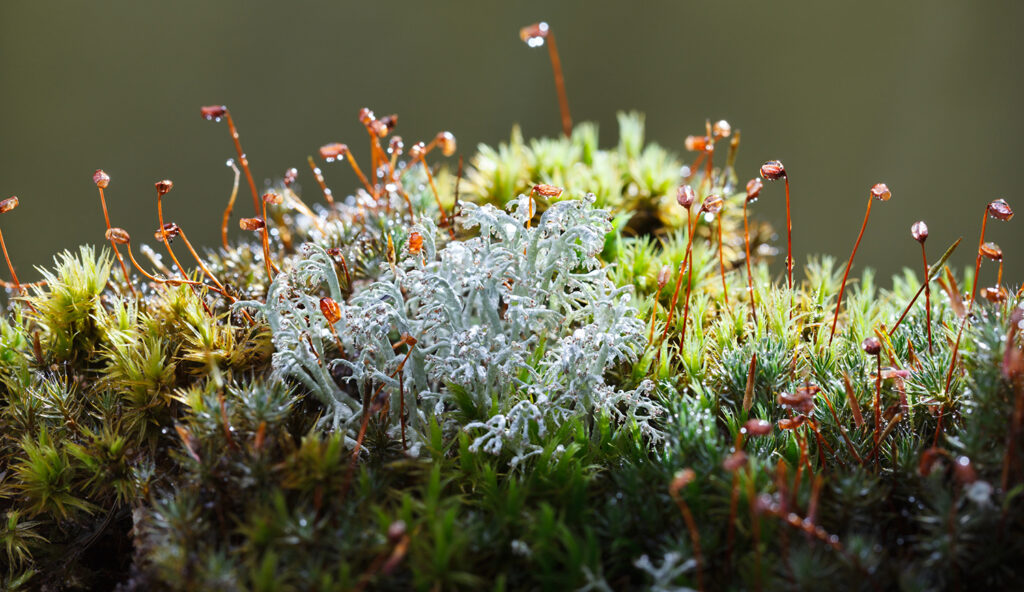
"The patterns of reciprocity by which mosses bind together a forest community offer us a vision of what could be. They take only the little that they need and give back in abundance," writes Robin Wall Kimmerer.
“The notion of a good life that most Indigenous peoples share is deeply relational: the relation to the land with all its interconnected human and nonhuman inhabitants constitutes their collective self-understanding as community,” writes Wahinkpe Topa (Four Arrows), who is Irish, Tsalagi and a made relative of the Oglala Lakota Medicine Horse Tiospaye. To grieve a place, then, is not sentimentality. It is the loss of a relative.
Robin Wall Kimmerer, a Potawatomi botanist and writer, often describes mosses as her oldest teachers and relatives. She argues that referring to a living being (bird, tree, rock) as “it” steals its personhood and turns “it” into a resource.
When a place we love dies, we grieve because we are losing a relative, not just a resource or some scenery. This reframe is available to anyone, regardless of politics. It doesn’t require agreeing on climate science. It requires only the capacity to love a place.
What If We Mourned Instead?
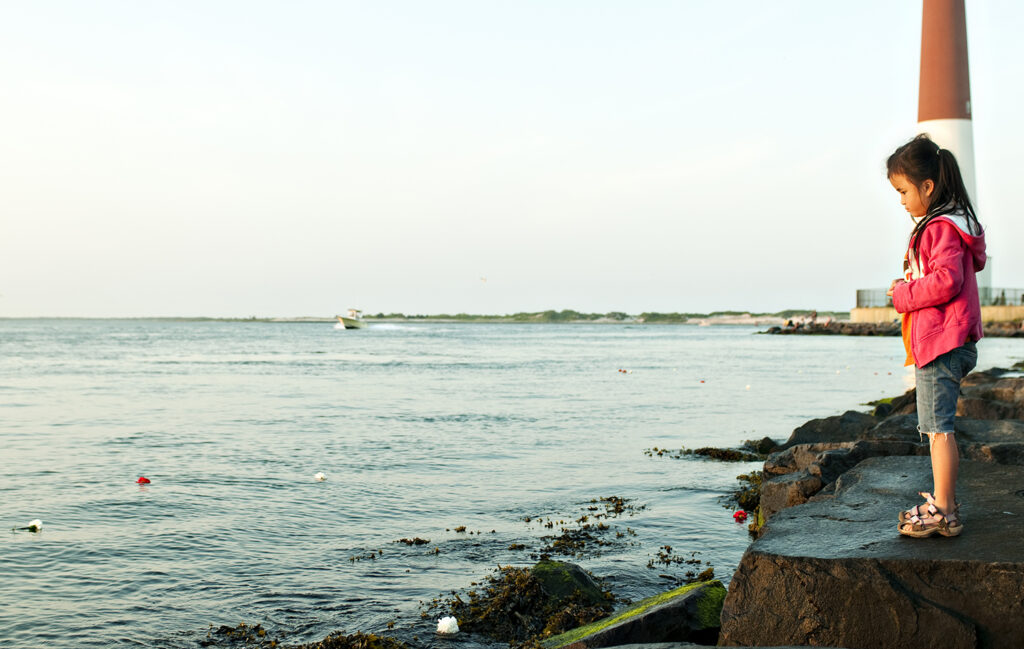
My daughter throwing a flower into the ocean, part of a communal grief ritual to remember fallen heroes on Memorial Day. Credit: Amy Durr
The original Earth Day on April 22, 1970, was not just a celebration but a somber, nationwide demonstration born of crisis. Activists used “mock funerals,” “dump-ins” of litter, and “die-ins” to mourn massive pollution and the 1969 Santa Barbara oil spill.
“Somewhere along the way, what started in 1970 as one of America’s most successful protests ever has turned into a massive marketing opportunity for companies to sell more stuff and flaunt their half-hearted initiatives. I’m not a cynical person, but it’s hard to ignore: Earth Day has become all gooey with virtue signaling, greenwashing, free tote bags and stickers,” writes Kristin Hostetter in her piece, Capitalism Stole Earth Day. Let’s Take It Back.
What would it look like to gather — in person, online, in the Transformative Sustainability community — and simply name the places we are grieving? Not to assign blame. Just to bear witness together.
I believe that experiencing our grief and then healing is essential to taking action. When we’re in touch with our deepest feelings they can be a touchstone energizing and steeling us to confront the obstacles to addressing the already daunting challenges we face.
A Postscript of Loss and Hope: The Return of the Sandcrabs
The lined seahorse (Hippocampus erectus) lives in the Western Atlantic Ocean off the coast of NJ, but is now listed as threatened and vulnerable. Credit: Wikipedia
The moment I discovered the sandcrabs were gone. The day I noticed insects no longer splattered the windshield. Or the year a local shop retired its long-standing summer tank of seahorses. Those were the precise moments I knew something dear was missing. They signaled my loss of the sacred, further enveloping me in the trauma of climate change.
Years later the sandcrabs returned, not as plentiful, but there. Relief, tinged with worry. Or was it worry, tinged with relief?
Editor: What are the places that touch your heart and what you’re doing to help them thrive this Earth Day?