
By Alliance Board Member Lori Myren-Manbeck
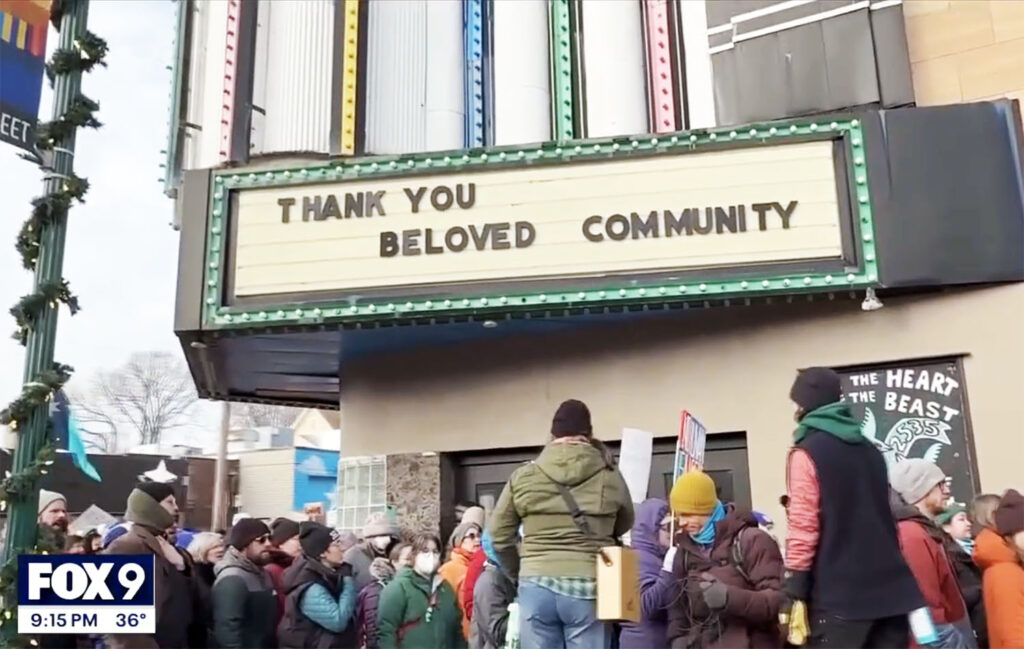
As a clinical psychologist living in Minneapolis, I am powerfully reminded, every day, that our community is in crisis – at a breaking point – and yet somehow we are thriving. Painfully, brokenly, haltingly…thriving.
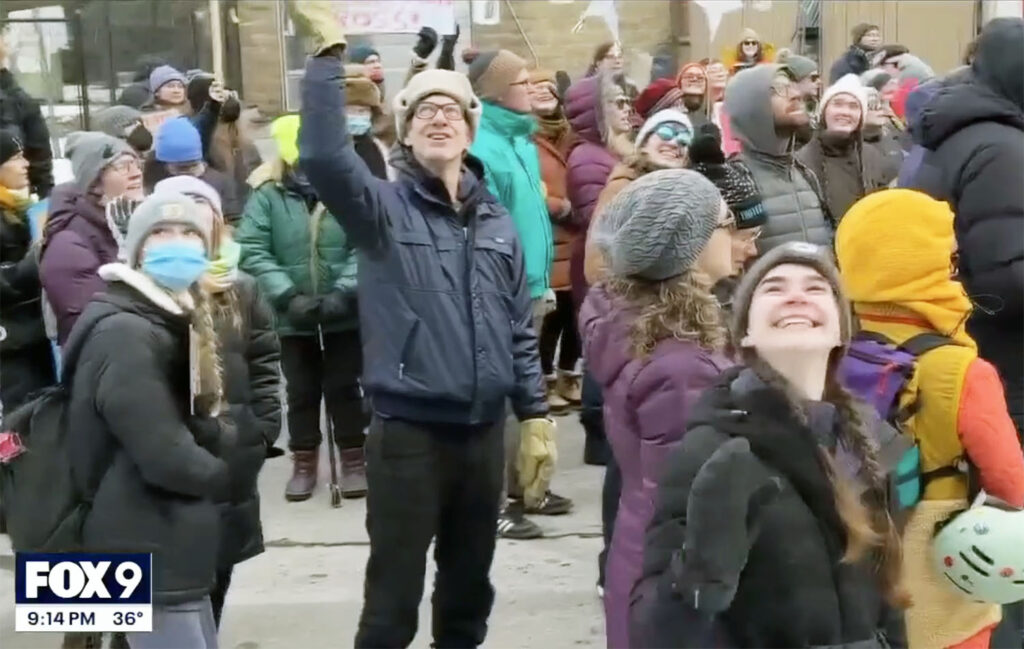
We are hurt and angry, the world seems very scary, it is hard to see the end of this brutality and cruelty AND we keep living. We get up and brush our teeth, stretch, kiss our loved ones, send them to school and go to work. We gather and march in the streets, cry and sing songs of resistance together. We make dinner, meet friends, celebrate birthdays, reach out to care for our neighbors, mourn, laugh at silly animal videos and sing our children to sleep. We go to therapy and we pray.
We are so scared and we are so alive. We are aware of the bullying that commands us to stop, to hide, to surrender, and we say NO! We keep moving. Sometimes we fall, sometimes we just can’t. But mostly we do. And the falling and stopping and getting up and restarting, the faltering and trying, are beautiful and human, full of vulnerability and life.
I’d like to share some tools that can move us from despair and anger to joy and empowered action. I’ll end with a poem that is beautiful in both form and message.
A Path Through Grief and Anger to Joy and Hope as Resistance
My work as a psychologist is informed by a liberation and social justice framework, with an emphasis on the role of power dynamics and inequality in psychological well-being and a recognition of the psychological effects of oppression. Many of my favorite tools come from Acceptance and Commitment Therapy (ACT), which emphasizes choosing actions based on our goals and values while fully acknowledging and accepting our feelings and thoughts.
This combination of a liberation psychology framework and practical ACT strategies allows therapy work that is both freeing and practical, encouraging clients to see the oppression and feel the despair while choosing to focus on the actions that best serve the person they want to be. It is a path to feeling and accepting grief, anger, and deep community pain and choosing joy and hope, celebration and love, as resistance.
Enough. We Will Not Sit Down. We Will Not be Quieted.
Joy, hope and love broaden perception and strengthen resilience. They deepen social bonds and restore energy. Oppression thrives on depletion and isolation. A joyful community is harder to fracture; a hopeful person is harder to silence.
The understanding that exuberant, hopeful, community-connected living is a powerful counter to oppression is not new. It’s an essential message of encouragement, a reminder that a spirit cannot be broken, that light is always stronger than darkness. It’s a song sung in a cotton field, on a Mississippi bridge or in an embattled neighborhood in Minneapolis.
Joy is a loud voice that cannot be silenced, a hug that cannot be broken. It’s a hand on an arm, groceries through a doorway, rent paid, phones filming; a sudden burst of laughter. It’s the voice that says,
“Enough. We will not sit down. We will not be quieted. We will love and love and love. We will cry and laugh. We will fall and get up. We will dance, loudly and wildly, arms outstretched to the universe. We will overcome because we are here and the arc of the universe pulls us forward.
Inspired Words About the Power of Joy, Love, and Hope to Overcome Hate
I want to end with some quotes and a poem, reminders that this struggle is not ours alone and joy, hope and love are incredible, powerful acts of resistance that can never be defeated by hate or oppression. This is our call to action.
A chorus of people from Costa Rica on social media: “You’re from Minnesota? We’re so proud of you. We’re praying for you. You’re not alone.”
Audre Lorde: “Joy is an act of Resistance.”
Che Guevara: “The true revolutionary is guided by great feelings of love.”
Charles Bukowski: “Joy is the simplest form of bravery.”
Martin Luther King, Jr: “We must accept finite disappointment, but never lose infinite hope.”
bell hooks: “The moment we choose to love we begin to move against domination, against oppression. The moment we choose to love we begin to move towards freedom, to act in ways that liberate ourselves and others.”
Angela Davis: “I don’t think we have any alternative other than remaining optimistic…What has kept me going has been the development of new modes of community. I don’t know whether I would have survived had not movements survived, had not communities of resistance, communities of struggle. So whatever I’m doing I always feel myself directly connected to those communities.”
Howard Zinn: “To be hopeful in bad times is not just foolishly romantic. It is based on the fact that human history is a history not only of cruelty, but also of compassion, sacrifice, courage, kindness. What we choose to emphasize in this complex history will determine our lives.”
Mariame Kaba: “When I would feel overwhelmed by what was going on in the world, I would just say to myself: ‘Hope is a discipline.’ It’s less about ‘how you feel,’ and more about the practice of making a decision every day, that you’re still gonna put one foot in front of the other… It’s work to be hopeful. It’s not a fuzzy feeling. You have to actually put in energy, time, and you have to be clear-eyed, and you have to hold fast to having a vision. It’s a hard thing to maintain. But it matters to have it, to believe that it’s possible to change the world.”
Whenever you see a tree
By Padma Venkatraman
Think
how many long years
this tree waited as a seed
for an animal or bird or wind or rain
to maybe carry it to maybe the right spot
where again it waited months for seasons to change
until time and temperature were fine enough to coax it
to swell and burst its hard shell so it could send slender roots
to clutch at grains of soil and let tender shoots reach toward the sun
Think how many decades or centuries it thickened and climbed and grew
taller and deeper never knowing if it would find enough water or light
or when conditions would be right so it could keep on spreading leaves
adding blossoms and dancing
Next time
you see
a tree
think
how
much
hope
it holds
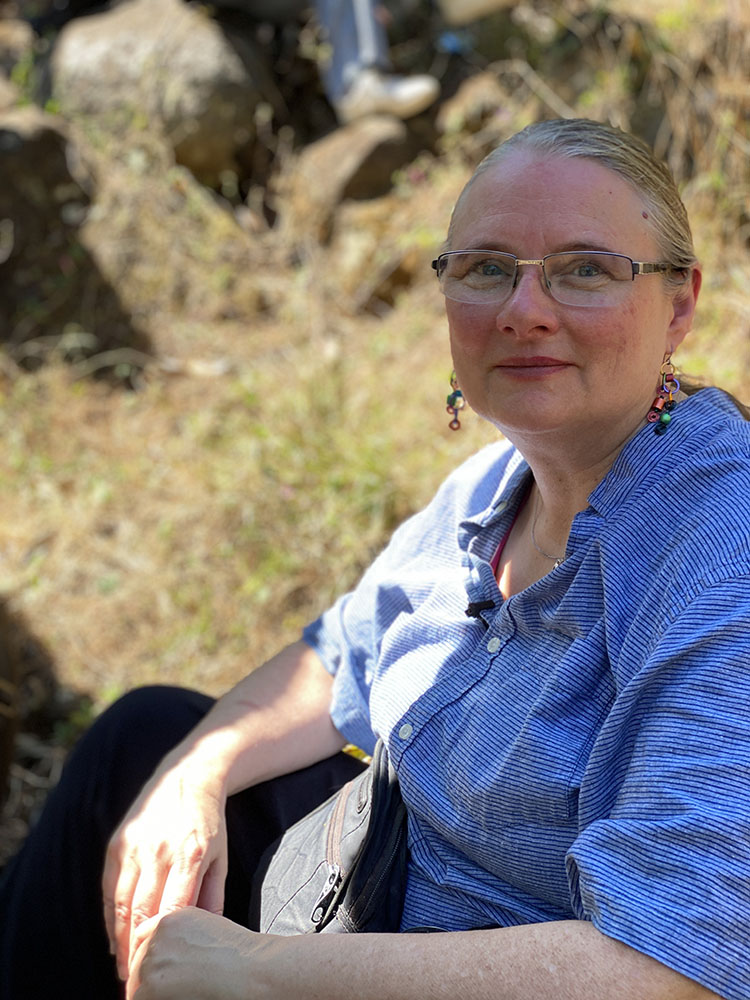
Lori Myren-Manbeck is a practicing licensed clinical psychologist, board member of the Alliance for Sustainability, author of Mars Can Wait, a book offering simple tips for creating a sustainable life, and host of Mars Can Wait, a new television series celebrating community and sustainable initiatives around the world.