

By Teri Reitan, Alliance Business Team Chair and Collaborative Edge Consulting Founder & CEO
I have witnessed the uncivil wars across a lifetime of moments and interactions, with memories going back to early childhood of unfair bullying and harassment in my neighborhood and at school.
However, in my late twenties, as a part-time counselor at a correctional group home for teenage girls, I received training that has stayed with me: as violence increases in society it’s normalized, meaning it becomes the next generation’s “new normal” — and thus the next wave of rebellion escalates beyond the last.
Children who witness or experience childhood trauma – from neglect, bullying and abuse to addiction and gun violence – grow up with these as their baseline reality or “normal.” Every one of them (and many others of us) have developed trauma responses that mostly go untreated, or minimally treated. Unfortunately, many don’t have access to or face stigmas about therapy, sadly not using the amazing breakthroughs in trauma therapy today.
Some trauma responses are more acceptable or even commended in our society, which adds to the bigger issue. For example, lashing out with verbal or physical aggression towards others is often celebrated in the sports, business and political worlds.
Often, a child or employee gets yelled at or is given an excessive punishment for an innocent transgression when they meant well. The key to a trauma response is the person’s emotions in the moment are controlling them rather than their being in control of their emotions.
What’s one thing that all trauma response types (fight, flight, freeze and fawn) have in common? They all come with triggers that remain and increase with intensity over time unless treated. Unfortunately, these trauma triggers have the potential to cause an innocuous difference of opinion to escalate into a fist fight between brothers, knifing at the local mall or even gunshots on the street within seconds.
In societies that demand simple root causes and snap judgments — or that prefer to politicize issues rather than solve them — the uncivil wars continue to escalate. Mental illness, gun accessibility, escalating drug use, abusive behavior — these are symptoms, not root causes.
Until we’re willing to understand and address the root causes, we’ll keep only treating symptoms at best. The true root cause goes one or two levels deeper. The true root cause can be found in teaching and learned behaviors that result in often rigid, biased perceptions, judgments and worldviews. In turn, this can lead to divisiveness and prejudice.
Another contributor to these root causes is epigenetics, the genetic transfer of trauma from previous generations. Yes, we’ve all been affected epigenetically, whether as a child of a Holocaust survivor or children being born after COVID or the climate emergency.
Knowing the Difference Between Civility and Uncivility Is Essential for Peace
In order for us to begin to unpack a strategy for addressing these root causes we need an understanding of what is and is not civility.
Civility – It has two dimensions: 1) Treating others with politeness, respect and consideration (social cooperation), and 2) Treating others as free and equal members of society (public-mindedness).
As a former St. Louis Park Human Rights Commission Chair, the second dimension sounds a lot like all people are created equal, regardless of their differences — and deserve equal respect. That’s exactly what my history and social studies classes taught me way back in high school.
As the famous story goes about the elephant and seven blind men, each had a different sense of what they were holding. Only by speaking together could they surmise that it was an elephant. Civility is much like this, requiring all of our differing perspectives to see the whole.
Uncivil – The definition includes rude and disrespectful behavior, hostility, aggression and lack of courtesy. Uncivil behavior can stem from disregard for others — through prejudice, the need to control, learned behaviors or personality traits.
Holding Differences with a New Mindset

We can look across a room and pre-judge someone based on their skin color, clothing, hairstyle, tattoo, or handbag. We need to acknowledge that this is prejudice, full stop. Or we can choose to notice differences as intriguing and decide we’ll reach out to get to know a person better.
When I chaired the local Human Rights Commission, we used our budget to distribute a “zero tolerance for prejudice” brochure to every city resident. A Russian émigré reached out to tell me that he had gone to considerable trouble to leave a government that told him who he should and shouldn’t like.
What I learned from hearing and respecting his perception broadened my perspective. And it reminded me to always know that we may perceive things very differently (but equally) from our neighbor, and neither is necessarily right or wrong. It also refined my definition of tolerance in two ways:
- Everyone is equally entitled to their opinion — and equally responsible for expressing it in a way that doesn’t infringe on others’ rights or dignity.
- Perception in a diverse society is multi-dimensional. It both tolerates difference, while appreciating and embracing differences in perceptions for combined broader perspectives.
Where Are We Taught to Collaborate?
Unfortunately there are few places in our country where we are taught to cooperate for a greater good instead of a zero-sum game, dog-eat-dog or survival of the fittest. The dominant white male paradigm is competitive rather than collaborative.
Over my years in the private, public and nonprofit sectors, I have found that the competitive model doesn’t work well, but a collaborative approach can create breakthroughs. I have found many companies encourage people to collaborate, but the reality is competition is what’s actually rewarded. It can be as simple as promoting individual performance over group performance.
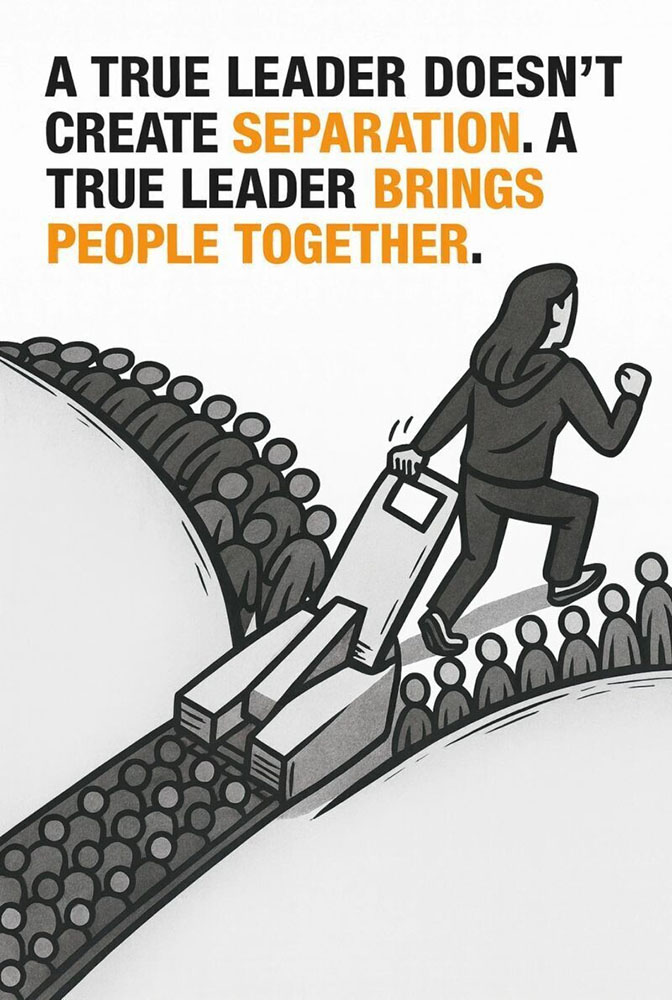
Consequently, I have focused my work on creating and leading collaborative teams toward one common goal or initiative. It has led to great success, while enriching my life and perspectives immeasurably. It has also taught me that true collaboration cannot exist in a competitive, zero-sum culture. That realization is why I am now committed to creating collaborative cultures and ecosystems that actually save money for a company.
A high schooler once told me he wanted to be an astronaut that worked at the International Space Station. His reason? He wanted to work side-by-side with different nations collaborating and advancing scientific knowledge for the benefit of all humanity. (Ironically, his father thought his watching war movies from a young age would cause him to want to enlist in the military as an adult – an unintended case of reverse psychology.)
Take Action for a Civility Revolution
As I’ve thought about it, there are two general areas for bringing about a shift to civility.
- Adopt a Civility Mindset:
- Model civility publicly – At a school board meeting, in traffic, or online or at home — practice the public-minded civility you want to see. Others are watching. Especially children.
- Be love – Give to others expecting nothing in return.
- Be the light – Uplift others and embrace community and unity.
- Choose curiosity over contempt – The next time you feel yourself pre-judging someone, pause. Get curious instead. Ask a question. Actually listen to the answer.
- Play collaboration games – In true collaboration (as in collaboration games), everyone has unique strengths, roles, and abilities and the only way to win is by relying on each other as a unified winning team. (Examples: Pandemic, Code Names, Horrified, etc.)
- Start one real conversation – Identify one person whose perspective is genuinely different from yours. Have a respectful conversation with them this week — not to change their mind, but to understand them. Focus not only on your differences but also on what you may have in common..
- Engage in Taking Action for Civility:
- Help Pass the Minnesota Equal Rights Amendment (HF1762/SF473) – This proposed constitutional amendment seeks to guarantee equal rights under the law and explicitly prohibit discrimination based on race, color, national origin, ancestry, disability, and sex (including pregnancy, gender identity/expression, and sexual orientation). It aims to be placed on the 2026 general election ballot for voter ratification.
- Champion Disability Rights Legislation – The Minnesota Council on Disability is focusing on supporting competitive, integrated employment for individuals with disabilities, including continuing the transition away from subminimum wage practices.
- Get Involved in the Alliance for Sustainability’s Business and Akepa Youth & School Programs – Both offer informative, inspiring educational and training opportunities to embody sustainability, health, equity and kindness.
- Support the UN Sustainable Development Goals – You can participate in their ActNow Campaign providing practical actions you can take. So far, more than 28 million actions have been taken around the world.
- Participate in the UN Act Now for a Peaceful World Campaign – You can host a Peace Circle, share your vision, or spark action in your community.
Begin Making A Difference Today
The uncivil wars didn’t start in Washington or on social media. They started in living rooms, school hallways and the quiet moments when we chose judgment over curiosity. Do we want to be right and in control more than being human?
Add the political polarization and divisive tensions tearing through this country, and we have the perfect storm. They will not be solved by a single policy, law or election. But we can begin to end this perfect storm through civility, healing, tolerance, inclusion, collaboration and unity – one gesture at a time.
Fortunately, we’ve recently seen a prominent example of people collaborating to counter uncivility and brutality. Minnesota residents came together in solidarity after the unconstitutional violence of ICE agents in our streets. They demonstrated that unity is still possible – even in the middle of a perfect storm of unconstitutional violence amidst 20 below zero wind chills.
Coming together is only the first step. As a larger community, we also need to heal.
You don’t need a title, a platform or a budget to be part of that change. You just need the willingness to see the person in front of you as your equal – different from you, and equal to you. That is where a more civil, respectful and healing society begins. It begins with you.